Technical Wiki · No. 13
Transformer Pressure-Relief Device and Safety Duct: Internal-Pressure Protection, Post-Operation Inspection and Calibration
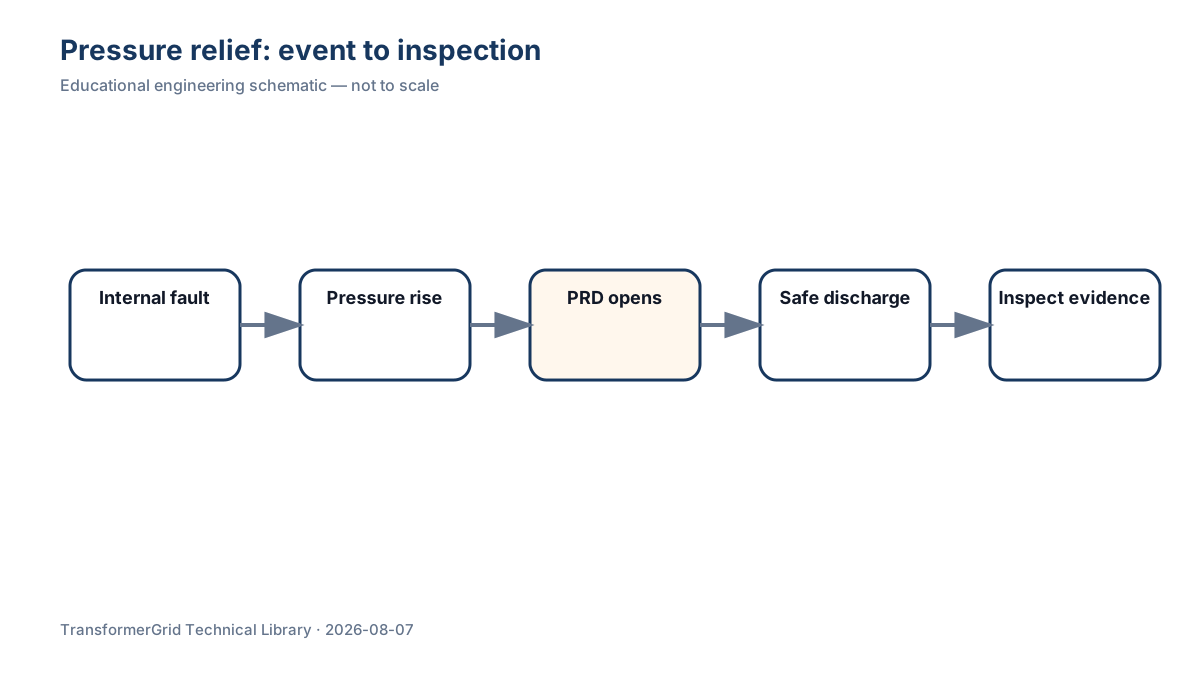
Where abnormal pressure comes from
Internal arcing, rapid heating, and fast decomposition of oil or insulation can cause pressure to rise quickly. Operation of the pressure-relief device indicates that its response condition has been reached; it does not by itself identify the fault location or root cause.
Contacts and discharge direction
Operating guidance commonly assigns the pressure-relief contact to an alarm or signal function; whether it participates in any additional logic must follow the project design. The discharge path should be arranged so released oil is not directed toward cable trenches, buswork or nearby equipment. A discharge guide or shield may be required by the installation design.
What to inspect after operation
The first step is to follow the site safety procedure and preserve the condition, not to force the device back to its normal position. Once the equipment is safely isolated, inspection should consider oil traces, leakage, seals and reset condition, control-circuit records, oil level, Buchholz indications, oil-gas evidence and other protection records, while searching for the internal cause of the pressure rise. Re-energization can be considered only after cause analysis, corrective work and the required tests are complete.
Calibration and sealing tests
Pressure-relief devices should be calibrated at the stages required by the applicable maintenance or acceptance program, with the operating value consistent with the nameplate or manufacturer requirement. After transformer installation, tank and pipework sealing tests should confirm absence of leakage, while the test pressure should not cause unintended operation of the pressure-relief device. The actual pressure, duration and acceptance values must come from the project documents.
PRD and Buchholz relay are not substitutes
A Buchholz relay responds to gas accumulation and oil movement. A pressure-relief device responds to internal tank pressure. They can operate during the same internal event, or only one may operate. Protection analysis should place both mechanical signals, DGA, electrical protection and visible evidence on the same event timeline.
Conclusion
The value of a pressure-relief device is not only that it releases pressure. It creates a controlled path that protects people and equipment and preserves important fault evidence.
Frequently Asked Questions
Does operation of the pressure-relief device mean the fault is gone?
No. The device releases pressure; the condition that created the pressure still needs to be investigated.
Can a PRD replace a Buchholz relay?
No. They respond to different physical phenomena and serve different protection functions.
Technical References
- Qin Ganghua, Wang Zhanhong, Wang Xin, et al. 《火力发电企业绝缘技术监督手册》 [Insulation Technical Supervision Manual for Thermal Power Enterprises]. Zhejiang University Press. Consulted for: Pressure-relief devices, operating contacts, installation direction, sealing and calibration.
- Sun Kejun, et al. 《电工手册》 [Electrical Engineering Handbook]. China Machine Press. Consulted for: Safety ducts, released oil, oil level and abnormal operating inspection.
- Xu Linbo, Yang Min, Huang Xudong, et al. 《火力发电企业继电保护技术监督手册》 [Relay Protection Technical Supervision Manual for Thermal Power Enterprises]. Zhejiang University Press. Consulted for: Pressure-relief calibration at commissioning and overhaul stages and protection-circuit boundaries.
Final engineering values, setpoints and operating decisions require written confirmation from the project engineer, owner or utility and manufacturer.