Procurement & Engineering
After a Pressure-Relief Device Operates, Why “Reset and Keep Running” Does Not Save Time
A fictional transformer scenario explaining why operation of a pressure-relief device is fault evidence that must be investigated before reset or re-energization decisions.
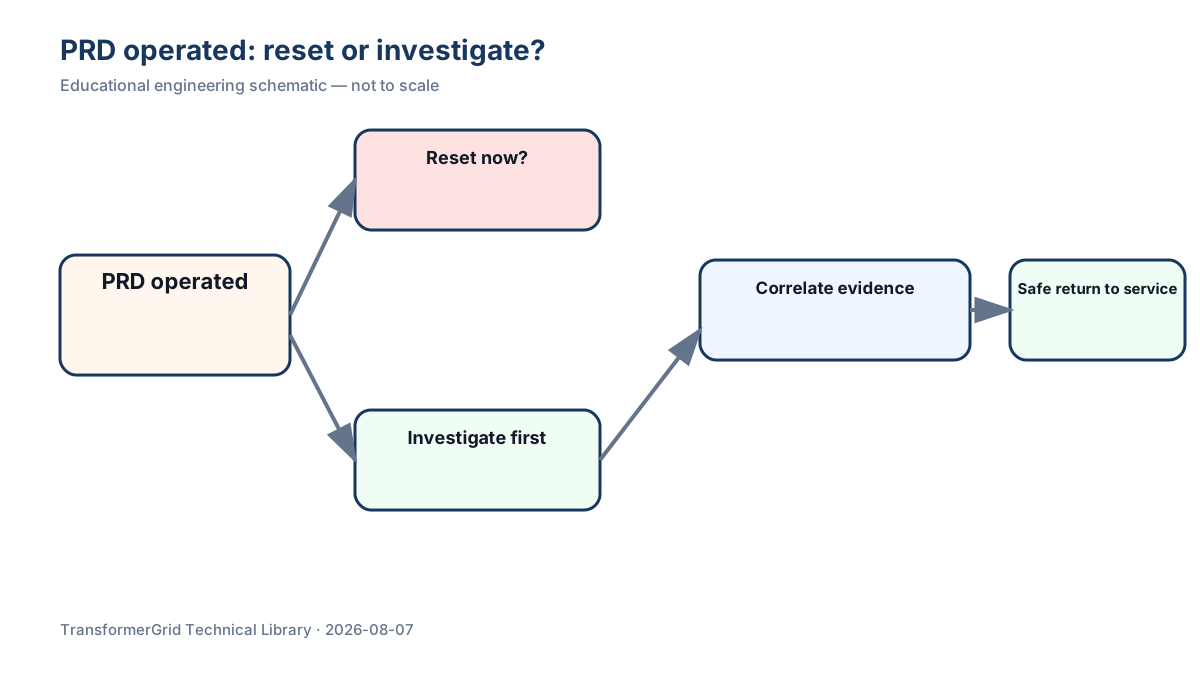
The pressure flag was up—and the schedule was already late
A site engineer noticed that the pressure-relief indicator had operated and there was a small amount of oil nearby. The schedule manager’s first reaction was: “There was no trip. Reset it first—we have to energize today.” A commissioning engineer asked one question: What pressure pushed it open? That question changed the discussion.
The operation is not the inconvenience; it is evidence
A pressure-relief device operates only after internal pressure reaches its response condition. The cause may involve rapid gas generation, an internal fault or another abnormal condition. Releasing the pressure does not mean the cause has disappeared. Immediate reset treats the consequence as if it were the cause and risks erasing valuable evidence.
What should be correlated after safe isolation
Under the approved site procedure, the investigation should consider released oil and leakage, oil level, seals, the operating mechanism and control circuit, as well as Buchholz indications, DGA and other protection records. The discharge path should also be checked so it does not direct oil toward cables, buswork or adjacent equipment. Calibration values, reset method and re-energization conditions must follow the manufacturer documentation and project rules.
How TransformerGrid defines the interface before FAT
TransformerGrid asks the supplier to define the PRD type, operated/reset indication, contact duty, installation orientation, discharge-control arrangement, calibration certificate and FAT inspection points. The device then arrives at site as part of an already reviewed protection interface—not as an unfamiliar component.
Where time is really saved
The real way to save time is not to push the device back after it operates. It is to define during procurement and FAT how an operation will be signaled, documented and investigated.
Confirm the pressure-relief interface before shipment
Send the pressure-relief device type, quantity, installation direction, contact duty, oil-discharge arrangement, calibration and FAT requirements. TransformerGrid can help place the signal, post-operation checks and document boundaries into the technical agreement before shipment.