Technical Wiki · No. 12
Buchholz Relay: Gas Alarm, Oil-Surge Trip, Sampling, Circuits and Diagnosis
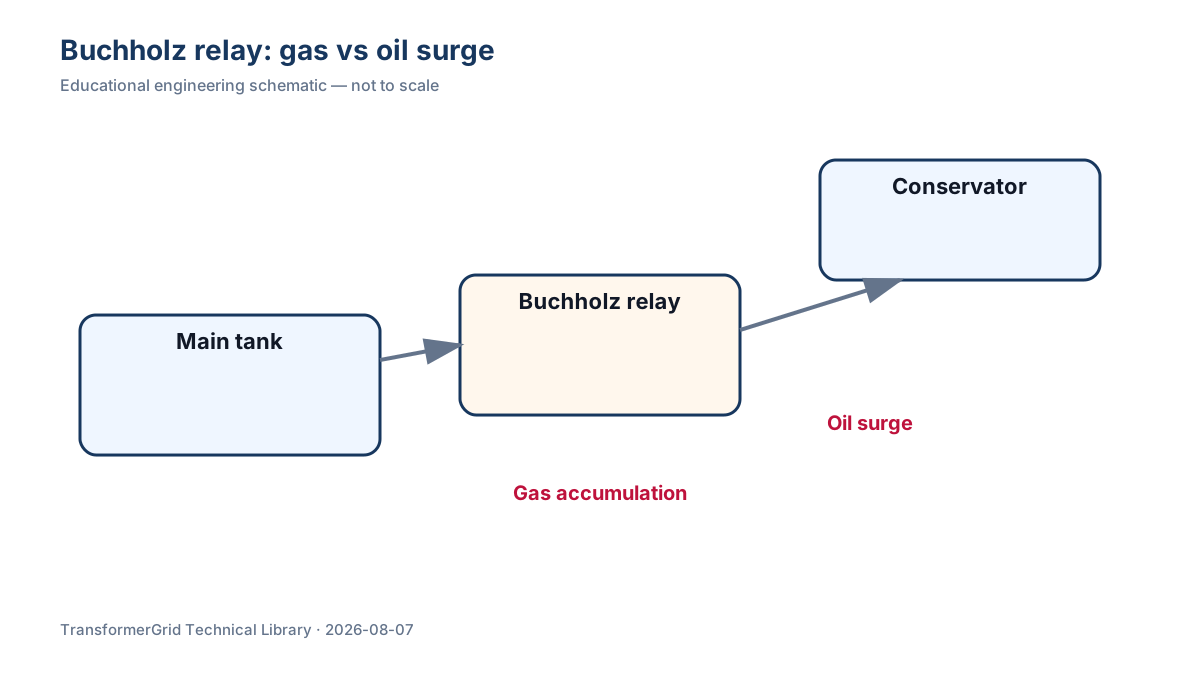
Where the relay works
The Buchholz relay is normally installed in the pipe between the transformer main tank and the conservator. An internal fault can decompose oil or solid insulation and generate gas, while faster oil movement can operate the relay mechanism in another way. Residual air after installation, maintenance or oil filling, abnormal oil level, and oil-flow disturbances caused by pumps may also affect the relay. An operation therefore has to be interpreted in the context of the actual operating condition.
Gas alarm and oil-surge trip
In engineering practice, gradual gas accumulation is commonly assigned to an alarm function, while a significant oil surge or rapid internal event can operate a trip function. The exact contacts, action logic and breaker outputs must be confirmed from the approved design documents. Technical maintenance guidance emphasizes reliable operation of both functions and correct functional testing of the control circuits; large transformers also require calibrated relays and an appropriate inspection program.
The evidence chain after an alarm
The investigation should not stop at asking whether the relay itself is faulty. Inspect the transformer exterior, oil level and leakage; record the amount of accumulated gas; where authorized by the site procedure, obtain gas evidence and examine its characteristics; correlate it with gas analysis and dissolved-gas analysis; review other protection operations and disturbance records; and perform electrical tests when required. None of these steps can replace the complete diagnostic chain by itself.
Installation and maintenance checks
Before energization, confirm that no unintended residual gas remains in the relay and that the valves between the relay and conservator are in the correct position. Outdoor installation should consider weather and vibration protection. Outage inspection should include sealing, leakage, viewing chamber condition, gas-alarm and oil-surge elements, as well as the complete alarm and trip circuit path. Vacuum filling and accessory installation sequences should follow the manufacturer and approved site procedures.
Relationship with DGA
The Buchholz relay detects accumulated gas or oil-flow phenomena; DGA measures characteristic gases dissolved in the insulating oil. The two are complementary. Relay operation provides evidence of an event, while DGA helps identify possible thermal faults, discharge activity or overheating of paper insulation. A temporarily unremarkable DGA result should not automatically override a mechanical-protection indication, and gas color alone should not be treated as the final diagnosis.
Conclusion
A Buchholz operation should be treated as evidence that must be preserved and verified. Site handling must be performed by authorized personnel under approved operating procedures. This page does not provide energized gas-sampling, reset or re-energization instructions.
Frequently Asked Questions
Does every oil-immersed transformer use a Buchholz relay?
No. It is mainly applied to transformers with a conservator and the required oil-pipe arrangement; the final application depends on the design.
Can a gas alarm simply be reset?
The evidence and cause should first be investigated under the site procedure. This page does not provide energized reset instructions.
Technical References
- Qin Ganghua, Wang Zhanhong, Wang Xin, et al. 《火力发电企业绝缘技术监督手册》 [Insulation Technical Supervision Manual for Thermal Power Enterprises]. Zhejiang University Press. Consulted for: Buchholz relay, gas alarm and oil-surge functions, gas evidence, oil level and abnormal inspection.
- Sun Kejun, et al. 《电工手册》 [Electrical Engineering Handbook]. China Machine Press. Consulted for: Buchholz installation, valve position, residual gas, leakage and routine operating checks.
- Xu Linbo, Yang Min, Huang Xudong, et al. 《火力发电企业继电保护技术监督手册》 [Relay Protection Technical Supervision Manual for Thermal Power Enterprises]. Zhejiang University Press. Consulted for: Buchholz calibration and functional testing of alarm and trip circuits.
- Zhou Qiukuan, Liu Mingjun, Liu Yan, et al. 《电力设备带电检测技术及应用》 [Live Detection Technologies and Applications for Power Equipment]. Jinan University Press. Consulted for: Dissolved-gas analysis and diagnosis of internal faults in oil-filled equipment.
Final engineering values, setpoints and operating decisions require written confirmation from the project engineer, owner or utility and manufacturer.