Technical Wiki · No. 14
Transformer Conservator, Bladder, Breather and Silica Gel: Oil-Volume Compensation, Moisture Control and Oil-Level Diagnosis
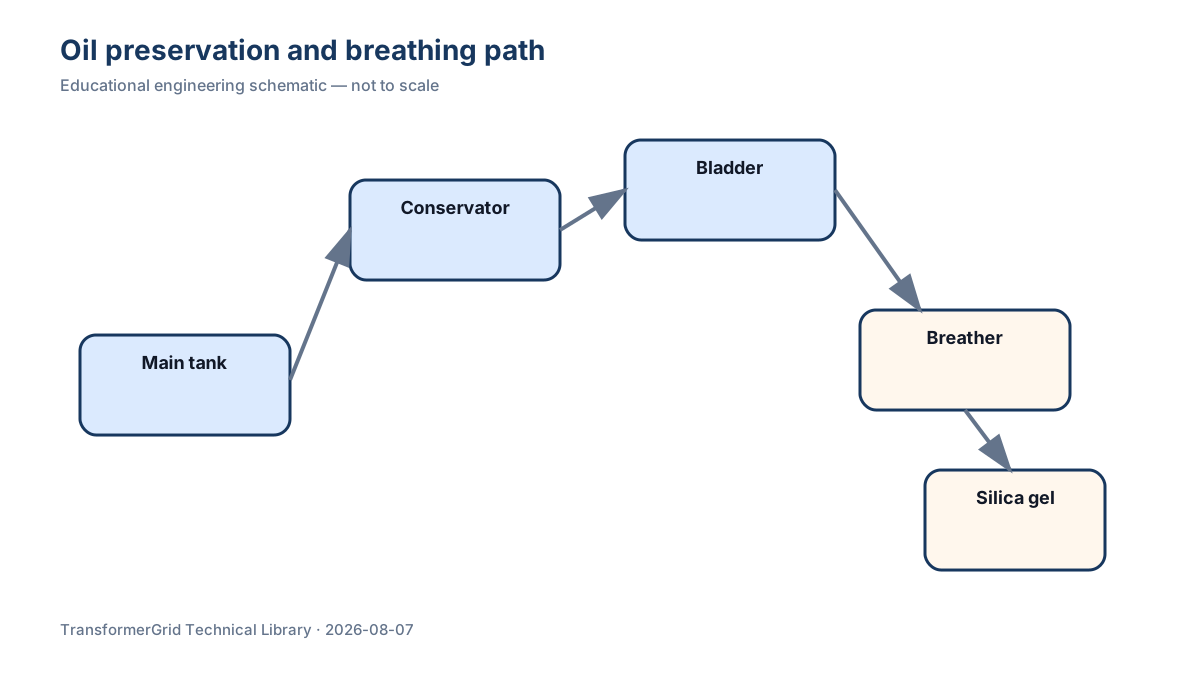
The basic role of the conservator
The conservator has two core functions: it allows the main tank to remain filled through the normal expansion and contraction range, and it reduces direct contact between insulating oil and ambient air. Oil-level indication should be interpreted together with oil temperature and ambient conditions rather than treating “high” or “low” as an isolated value.
Bladder or diaphragm
A bladder or diaphragm provides an additional barrier between the oil and outside air. Loss of sealing, aging or damage can change the apparent oil-level behavior and disturb the breathing and oil-preservation function. Inspection or replacement intervals should follow the product documents, operating age and actual condition rather than a universal fixed period.
Breather and silica gel
When the conservator exchanges air with the atmosphere, the desiccant in the breather reduces moisture entering with the air. Color-changing silica gel can provide a visible indication that moisture has reached the desiccant. A blocked breather, exhausted desiccant, poor sealing or icing in low temperatures can prevent normal breathing. If the silica gel changes color, the air path and sealing should also be checked rather than simply replacing the desiccant.
How to interpret abnormal oil level
An unexpectedly high or low oil level can be related to temperature, leakage, valve position, a blocked breathing path, bladder condition or trapped air. Before energization, residual air in bushing turrets, radiators and upper pipework may also need to be removed under the approved procedure. Opening vents or drain points requires the applicable site protection and safety steps.
Inspection and acceptance
Routine inspection should correlate oil level with temperature, oil appearance, leakage, breather condition, desiccant color, valve position and pipework sealing. Procurement documents should define the conservator type, oil-level indicator, bladder material or construction, breather specification, alarm contacts, transport arrangement and site-installation requirements.
Conclusion
A jar of silica gel is inexpensive, but it sits at the boundary between the transformer oil-paper insulation system and ambient air. Effective maintenance treats the conservator, bladder, breather, oil level and sealing as one system.
Frequently Asked Questions
If silica gel changes color, is replacing the gel enough?
Not necessarily. The breathing path, sealing, blockage, oil level and bladder condition should also be checked.
Does a low oil level always mean there is a leak?
No. Oil temperature, valve position, breathing condition and instrument status should be considered as well.
Technical References
- Qin Ganghua, Wang Zhanhong, Wang Xin, et al. 《火力发电企业绝缘技术监督手册》 [Insulation Technical Supervision Manual for Thermal Power Enterprises]. Zhejiang University Press. Consulted for: Conservators, bladders, breathers, oil level and moisture-control inspection.
- Sun Kejun, et al. 《电工手册》 [Electrical Engineering Handbook]. China Machine Press. Consulted for: Conservator oil level, blocked breathers, silica-gel color change, valves and routine inspection.
Final engineering values, setpoints and operating decisions require written confirmation from the project engineer, owner or utility and manufacturer.