Procurement & Engineering
After a Buchholz Gas Alarm, the Most Dangerous Shortcut Is Calling It a Sensor Error
A fictional transformer operating scenario explaining why a Buchholz gas alarm should be preserved as evidence and correlated with oil level, leakage, DGA, other protection and test results.
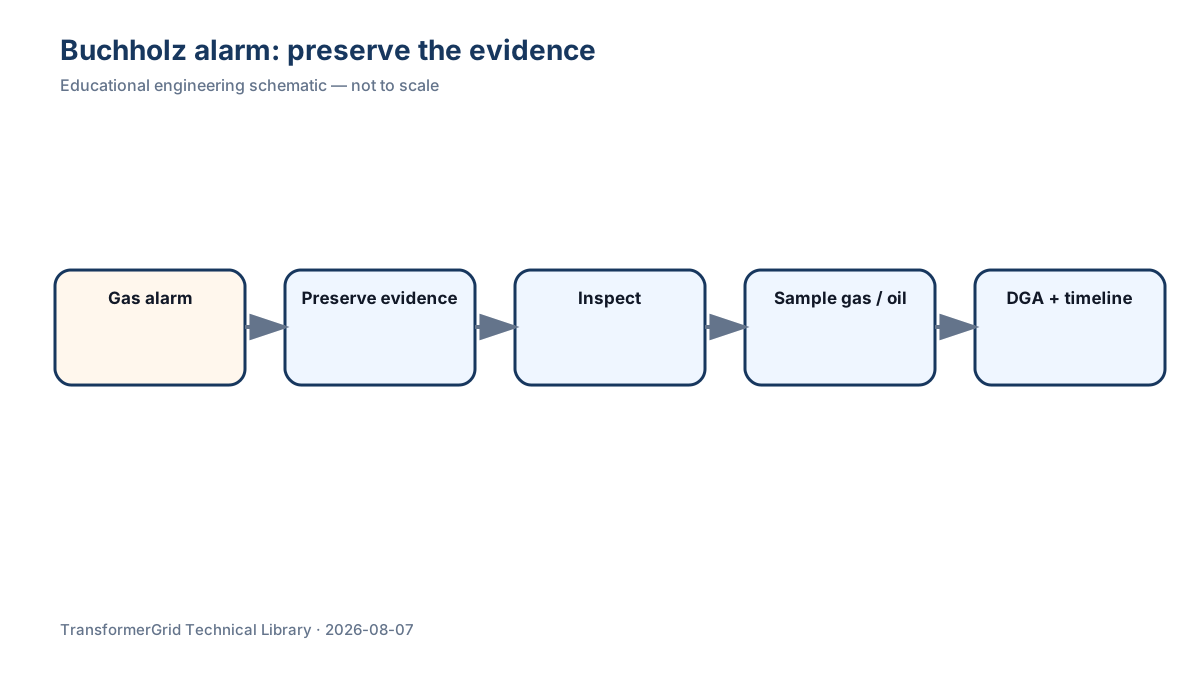
The first suggestion was to reset it
A Buchholz gas alarm appeared in the control room during the night shift. Someone said, “We did maintenance yesterday. It is probably just air—reset it and see.” The maintenance supervisor disagreed. He first recorded the alarm time, load, oil temperature, oil level and cooler status, then required the team to follow the site procedure for checking accumulated gas, the transformer exterior, leakage and other protection indications.
Why an alarm cannot be divided immediately into “real” or “false”
A Buchholz relay can respond to gas generated by internal insulation deterioration, but it can also be affected by residual air after oil work, oil-level changes, leakage or oil-flow disturbances. Because more than one explanation is possible, the signal should not be dismissed as either “a true fault” or “a bad sensor” without evidence. Resetting removes the indication; it does not remove the cause and may erase the earliest event clue.
The evidence chain matters more than one observation
A sound diagnostic sequence preserves the condition, checks external factors, collects gas evidence only under an authorized procedure, correlates it with dissolved-gas analysis, and then reviews electrical protection and test results. Gas alarm, oil-surge trip, pressure relief and DGA should be placed on the same timeline rather than interpreted as isolated events.
What TransformerGrid can solve before the transformer reaches site
For new equipment, TransformerGrid writes the Buchholz relay make/model, orientation, valves, gas-alarm and oil-surge contacts, terminal numbers, signal/trip duty, tests and spares into the accessory and protection matrix. FAT then verifies the circuit path instead of merely checking that a relay is physically installed.
The point of the story
Whether the fictional alarm ultimately came from an internal fault is not the point. The important decision was that the team preserved the evidence and did not substitute a reset button for engineering judgment.
Put the Buchholz signals into the protection matrix
Send the transformer oil-pipe arrangement, Buchholz relay type, alarm and trip contacts, alarm/trip philosophy, terminal schedule and DGA-document requirements. TransformerGrid can help verify valves, signals, circuit functional tests and FAT witness points.