Procurement & Engineering
How One Jar of Discolored Silica Gel Exposed a Transformer Breathing-System Problem
A fictional transformer maintenance scenario showing how silica-gel color change can reveal a larger problem in the conservator, bladder, breather, sealing and oil-level system.
The obvious fix was to replace the silica gel
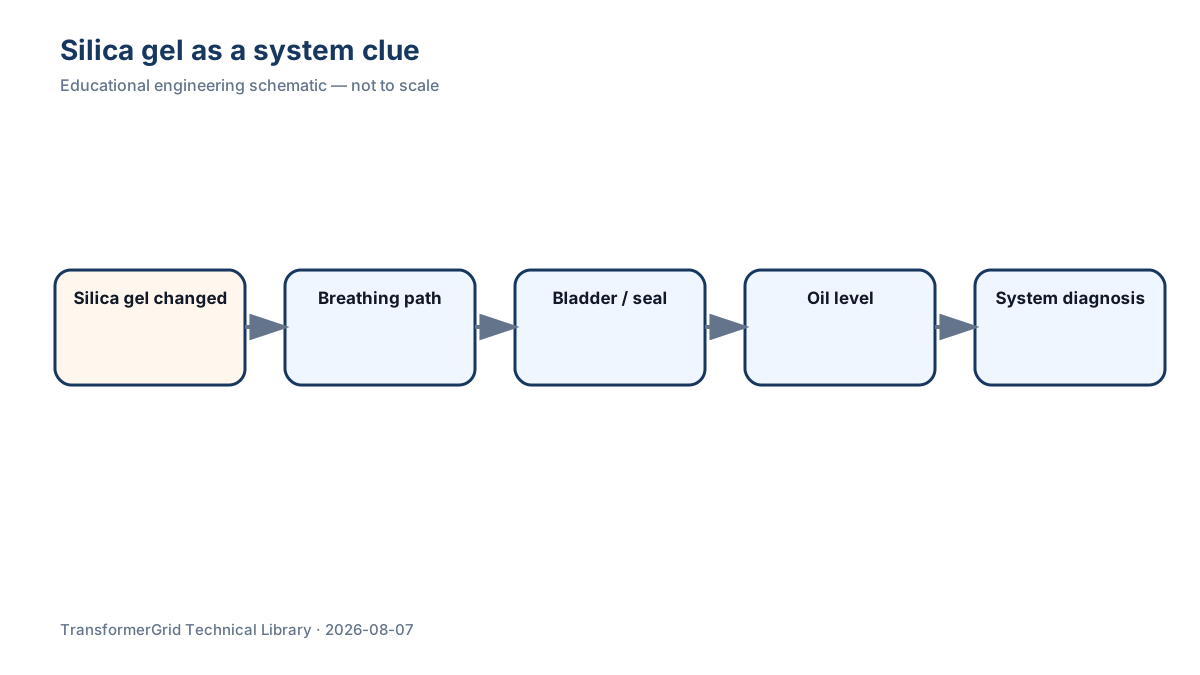
During an inspection, an operator found that most of the silica gel in the breather had changed color. Someone suggested replacing the desiccant and closing the work order. The supervisor instead asked for photographs of oil level, oil temperature and the breather pipework, and requested checks for blockage, leakage or icing. The issue turned out to be larger than wet silica gel: the breathing path had been operating abnormally for a long time.
Why a small accessory can expose a system-level problem
The conservator accommodates oil expansion and contraction. A bladder or diaphragm reduces direct oil-air contact. The breather dries the air exchanged with the atmosphere. Silica-gel color change is only the visible indication that moisture has reached the desiccant. If the air path is blocked, sealing is lost or the bladder is damaged, replacing silica gel alone cannot restore the oil-preservation system.
What procurement documents often omit
Many specifications say only “conservator with breather.” They do not define the conservator arrangement, bladder, oil-level indicator, alarm contacts, breather type, anti-icing provisions, valves or transport/field-assembly requirements. The equipment reaches site, the oil level does not match the temperature, and only then does the project team start asking how the system was built.
How TransformerGrid treats oil preservation as one chain
TransformerGrid reviews the oil-preservation system as a connected path: main tank → connecting pipe → Buchholz relay → conservator → bladder/air side → breather. Sealing, valves, oil level, alarms, venting and documents are checked along the chain. Silica gel then becomes a window into the complete oil-preservation system rather than an isolated consumable.
The inexpensive jar is not the expensive part
Silica gel itself is cheap. The condition it can reveal may affect the oil-paper insulation environment of the entire transformer.
Review the conservator and breathing system as one chain
Send the conservator type, bladder or diaphragm arrangement, oil-level indicator, alarm contacts, breather, valves, transport and field-installation requirements. TransformerGrid can help verify the complete main-tank → Buchholz → conservator → breather interface.