Procurement & Engineering
The Fans Were Running—So Why Was Winding Temperature Still Rising? Cooling Is Not a Switch
A fictional transformer FAT scenario explaining why running fans do not prove effective cooling and how oil flow, valves, radiators, pumps, power and control logic form one heat-transfer chain.
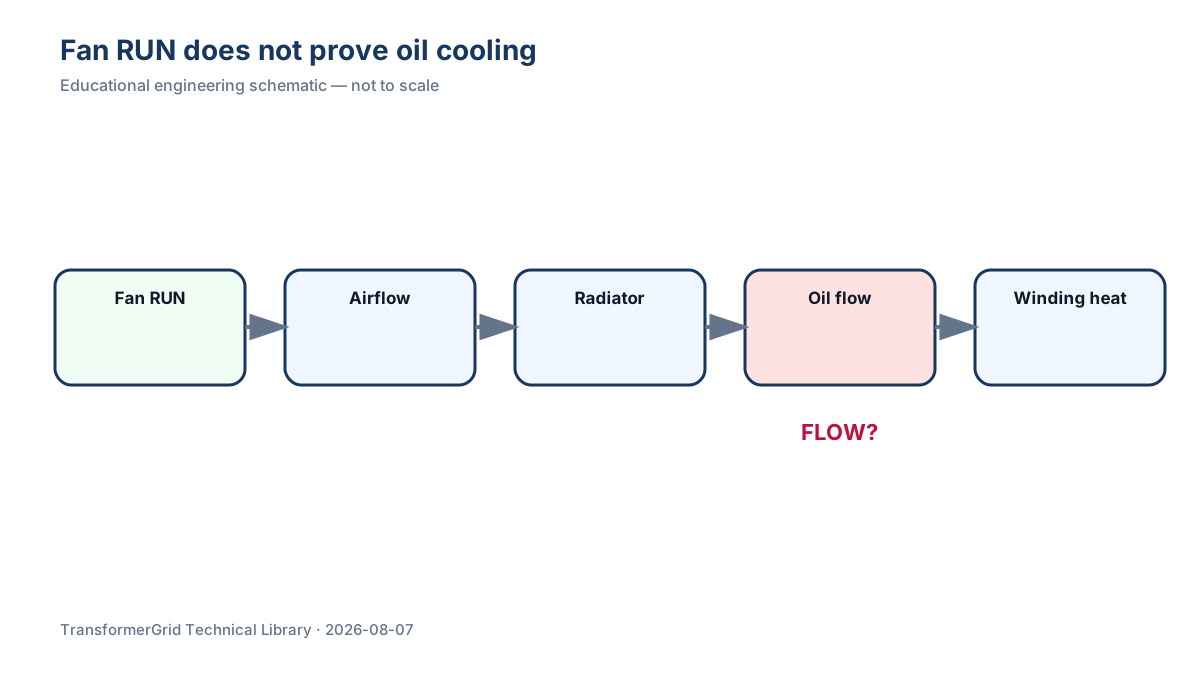
Every fan showed “running,” but the temperature kept climbing
During a full-load test, the control cabinet showed all fans in the RUN state, yet winding temperature continued to rise. The procurement manager asked the obvious question: if the fans are turning, why is the transformer not cooling? The commissioning team found that radiator-valve position, oil-flow feedback and the control sequence for one cooling group did not form a complete heat-transfer path.
Fan rotation is only the last part of the cooling chain
Cooling requires heat to move from the windings into the oil, from the oil into the radiator or cooler, and then into air or water. The fan is only the final section. Pump flow, valve position, oil path, radiator fouling, fan direction, auxiliary power and control grouping can each create a situation where the RUN indication looks normal but actual cooling capacity is not.
What the four cooling letters really mean
ONAN, ONAF, OFAF and ODAF are not marketing labels. They describe combinations of oil circulation and external cooling. As forced cooling increases, the transformer depends more heavily on fans, pumps, oil-flow relays, control power and standby groups. A quotation that lists only one cooling code still says little about redundancy and control.
How TransformerGrid turns the cooling code into an FAT scope
TransformerGrid asks the supplier to submit cooling rating stages, fan and pump groups, duty/standby relationship, start logic, oil-flow feedback, failure alarms, control-supply changeover and terminal schedules. FAT then simulates each group instead of simply observing whether motors rotate.
The acceptance question that matters
The real question is not “Are the fans running?” It is “Is the rated heat being carried away along the intended path, and does the control system know which link has failed?”
Verify the complete cooling chain, not just fan rotation
Send the ONAN/ONAF/OFAF/ODAF rating stages, fan and pump quantities, duty/standby arrangement, oil-flow feedback, auxiliary supplies, automatic start and failure-alarm requirements. TransformerGrid can help build the cooling-control and FAT simulation checklist.