Procurement & Engineering
The Core-Ground Current Looked Small—Why Engineers Cared More About the Trend
A fictional transformer diagnostic scenario showing why core-ground current trend, insulation, DGA, thermal evidence and live detection matter more than one isolated current reading.
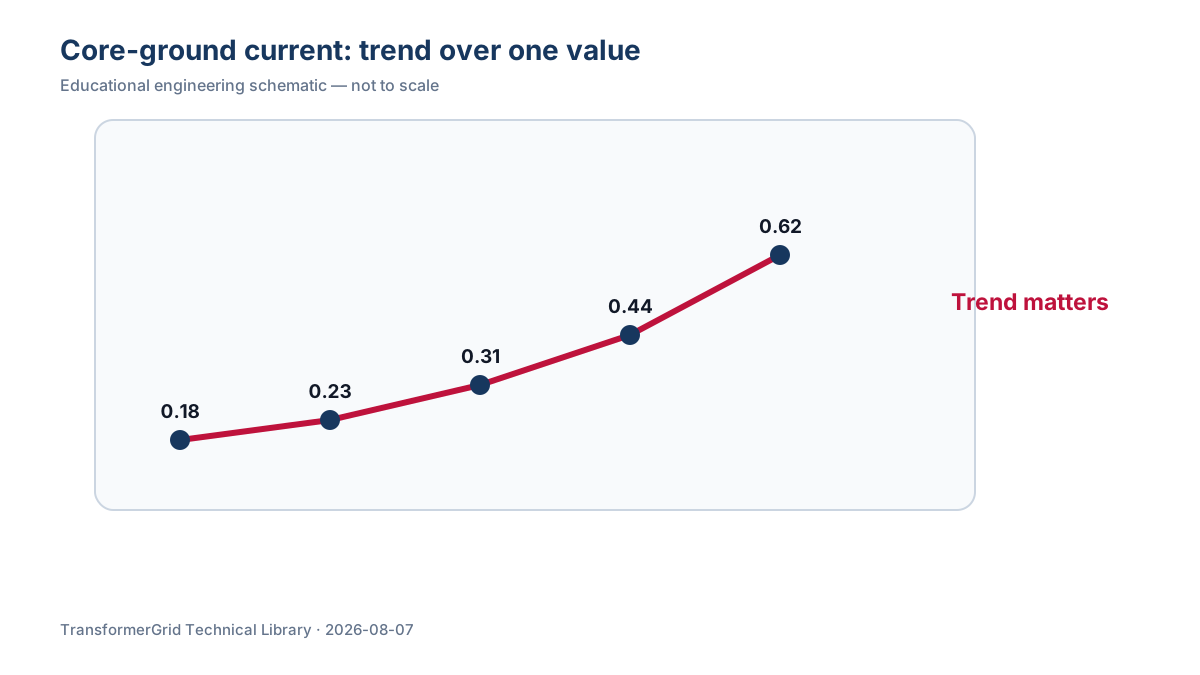
The value was not dramatic; the trend was
During a routine test, the transformer core-ground current was not the “huge” number some team members expected from a serious problem. One person suggested no further action. The test engineer instead lined up the previous six records: current had been rising steadily, while oil-gas and local-temperature evidence had also changed. The single value looked ordinary; the trend did not.
Why a small current can still deserve attention
The core is normally connected through a controlled single grounding point. If a second unintended ground develops, metallic structures can form a closed loop and carry circulating current under leakage flux, creating local overheating. The condition can develop slowly and may not immediately operate the main transformer protection.
Diagnosis cannot rely on one clamp meter
First confirm the measurement method and exclude external interference. Then compare the ground-current trend with insulation resistance, DGA, infrared temperature or other live-detection evidence. Published live-detection cases also show that high-frequency pulses measured on the core-ground lead may need to be compared with UHF methods to determine whether the signal originates inside the transformer or outside it.
How TransformerGrid makes future trends interpretable
In new-equipment documentation, TransformerGrid pushes for clear core and clamp grounding drawings, test terminals, factory baseline values and defined site measurement conditions. These items are placed in drawing-review and FAT records. Without a baseline, later trends are much harder to interpret.
Engineering judgment needs context
A modest reading combined with a persistent trend can deserve more attention than one isolated high value. Engineering decisions are weakest when numbers are separated from history and supporting evidence.
Leave a comparable baseline for core grounding
Send the core and clamp grounding drawings, grounding test terminals, insulation requirements, factory baseline values and site re-measurement requirements. TransformerGrid can help preserve the measurement conditions and records in drawings, FAT and as-built documents.