Pad Mounted Transformer for Hot Climate and Tropical Projects: How Nora Reviewed Ambient Temperature, Temperature Rise and ONAN Cooling Before RFQ
1. Introduction: Nora's Technical Challenge in a Tropical Environment
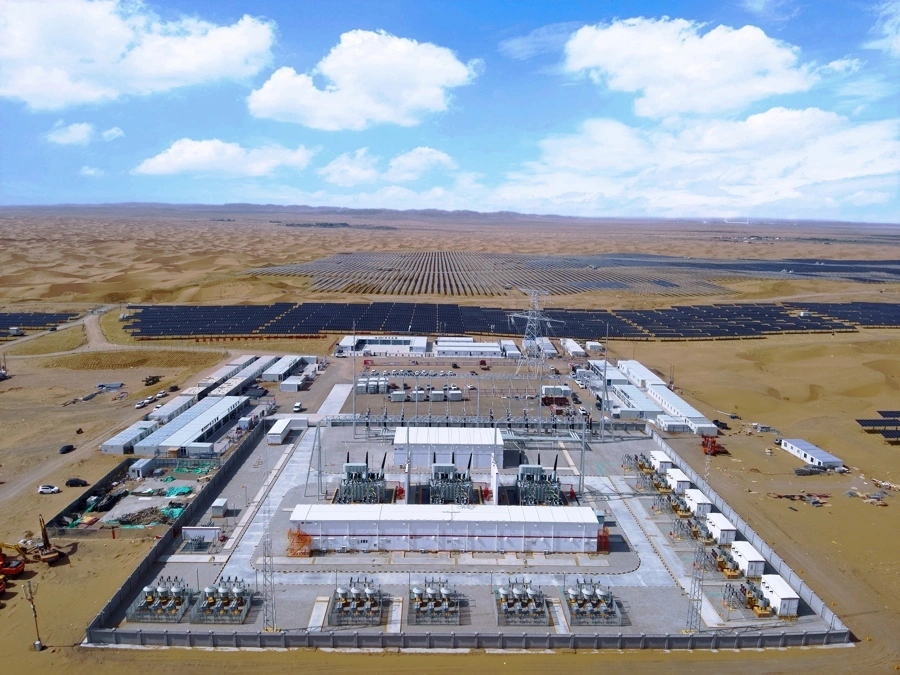
When Nora Williams took over the electrical infrastructure planning for a new industrial and renewable energy complex in a tropical region, she immediately recognized a glaring gap in the preliminary equipment specifications. The engineering drafts for the site’s power distribution simply stated "outdoor installation" for the required pad mounted transformer units.
Nora understood that in environments characterized by aggressive sun exposure, severe dust, and high heat, "outdoor installation" is an dangerously insufficient instruction for a serious Request for Quotation (RFQ). An outdoor pad mounted transformer operating in a mild 20°C climate behaves very differently than one operating under a relentless 45°C or 50°C tropical sun. She knew that to secure long-term reliability and avoid catastrophic thermal degradation, she had to explicitly confirm the maximum ambient temperature, the specific transformer temperature rise limits, the required ONAN cooling method, and the enclosure’s environmental resilience before the supplier began drafting a quotation. By addressing these thermal performance parameters early, she effectively shielded the project from premature equipment failure.
2. Why Ambient Temperature Must Be Confirmed Before Quotation
The fundamental starting point for designing any pad mounted transformer for hot climate applications is the maximum ambient temperature. Standard off-the-shelf transformers are typically designed around a baseline average ambient temperature—often 30°C average over 24 hours, with a peak maximum of 40°C.
However, a tropical or desert project might routinely experience a maximum ambient temperature of 45°C or even 50°C. If a standard transformer is deployed in a 50°C environment without engineering modifications, its internal components will rapidly exceed their safe operating limits. High ambient temperature directly impacts the transformer loading capability, the necessary cooling capacity, and the rate of insulation aging. For every 8°C to 10°C continuous rise above the insulation's rated design limit, the lifespan of the cellulose paper insulation is effectively cut in half. Therefore, explicitly stating the project’s ambient temperature profile connects directly to the project standards and long-term operational safety.
4. Understanding Temperature Rise in Pad Mounted Transformers
To properly specify a pad mounted transformer for tropical projects, Nora had to define the acceptable transformer temperature rise. This involves three critical metrics: top oil temperature rise, average winding temperature rise, and hot spot temperature.
Top Oil Temperature Rise: This measures how much the insulating mineral oil (or PCB-free oil) heats up above the ambient air temperature. The top oil acts as the primary heat transfer medium, carrying heat away from the core and windings to the external radiators or tank walls.
Average Winding Temperature Rise: This measures the average heat increase of the copper winding or aluminum winding above the ambient temperature. Standard designs often allow a 65°C average winding temperature rise. However, if the ambient temperature is extremely high, engineers may specify a stricter 55°C rise to maintain a safe total operating temperature.
Hot Spot Temperature: This is the absolute hottest point within the transformer windings. It is the primary factor driving insulation aging.
Total Operating Temperature = Ambient Temperature + Temperature Rise. If the ambient temperature is 50°C and the winding temperature rise is 65°C, the winding operates at an average of 115°C. By communicating these limits in the RFQ, the manufacturer can adjust the internal cooling ducts, the volume of insulating liquid, and the size of the external radiators to meet the required testing requirements and ensure long-term operation confidence.
5. ONAN Cooling: Oil Natural Air Natural Explained
The most prevalent cooling method for a standard outdoor pad mounted transformer is ONAN cooling (Oil Natural Air Natural). In an ONAN cooling transformer, the insulating oil absorbs heat from the active core and windings, becomes less dense, and naturally rises to the top of the tank. It then flows into the cooling fins or radiators where the natural ambient air cools the oil, causing it to descend and circulate back into the bottom of the tank.
ONAN cooling is highly reliable because it relies entirely on thermosiphon physics without any moving parts like forced pumps or fans. This makes it ideal for remote tropical or desert locations where maintenance access is difficult. However, because it relies on natural air convection, the buyer must confirm that the ambient temperature, the anticipated loading profile, and the enclosure design will support the necessary heat dissipation. Proper thermal review ensures that the ONAN cooling capacity is correctly sized for the specific project standards and environmental reality.
6. How Ambient Temperature Thresholds Change the RFQ
Nora knew that the difference between a 40°C, 45°C, and 50°C maximum ambient environment drastically alters the technical specifications.
At a standard 40°C maximum, standard NEMA or IEEE designs generally apply without major modifications. However, crossing into 45°C or 50°C thresholds forces the engineering team to derate the transformer or actively increase its cooling surface area. If a project in the UAE or a tropical industrial park hits 50°C, the manufacturer may need to utilize a larger tank, add extensive cooling fins, or lower the permissible temperature rise requirement (e.g., specifying a 55°C rise instead of 65°C) to keep the hot spot temperature within safe limits. This impacts the physical footprint, the volume of oil required, and ultimately the equipment quotation. You can see similar environmental considerations discussed in the guide on Pole and Pad Mounted Transformers for Hot Desert Projects in the UAE: How Karim Reduced Heat, Dust and Delivery Risk.
7. Defining the Complete Tropical Environment
Beyond just high ambient temperature, a true tropical environment introduces a barrage of environmental stress factors. Nora documented the presence of strong sunlight, which adds severe solar radiation heat load to the transformer enclosure. She noted the severe humidity variation, which risks internal condensation if the tank sealing is compromised.
Furthermore, coastal salt air, industrial pollution, and heavy dust require specialized enclosure coating and rigorous sealing protocols. The concrete pad must feature proper drainage to prevent the cabinet base from standing in tropical monsoon water. By communicating these factors—drainage, maintenance access, and environmental corrosivity—Nora ensured the supplier provided an enclosure built to survive, rather than just an electrical core placed in a generic metal box. Additional details on these specific protections are available in the Coastal Corrosion Protection for Pole & Pad Mounted Transformers | Buyer Guide.
9. Reviewing BIL, Impedance and Tap Changer Requirements
To complete her technical package, Nora reviewed the electrical parameters alongside the thermal ones. She specified the BIL (Basic Impulse Insulation Level), which dictates the equipment’s ability to withstand transient overvoltages like lightning strikes—a common occurrence in tropical storms. A proper BIL supports insulation coordination across the entire utility grid.
She also confirmed the short-circuit impedance percentage. Impedance dictates the voltage drop under load and the maximum fault current during a short circuit. Proper impedance specification is vital for protection coordination and comprehensive technical review. Lastly, Nora specified an off-circuit tap changer (usually a 5-position switch) to allow manual adjustment of the secondary voltage to compensate for long-term grid voltage variations. While an on-load tap changer is occasionally used in massive substations, an off-circuit tap changer is standard for a pad mounted transformer.
10. Essential Accessories for Hot Climate Operations
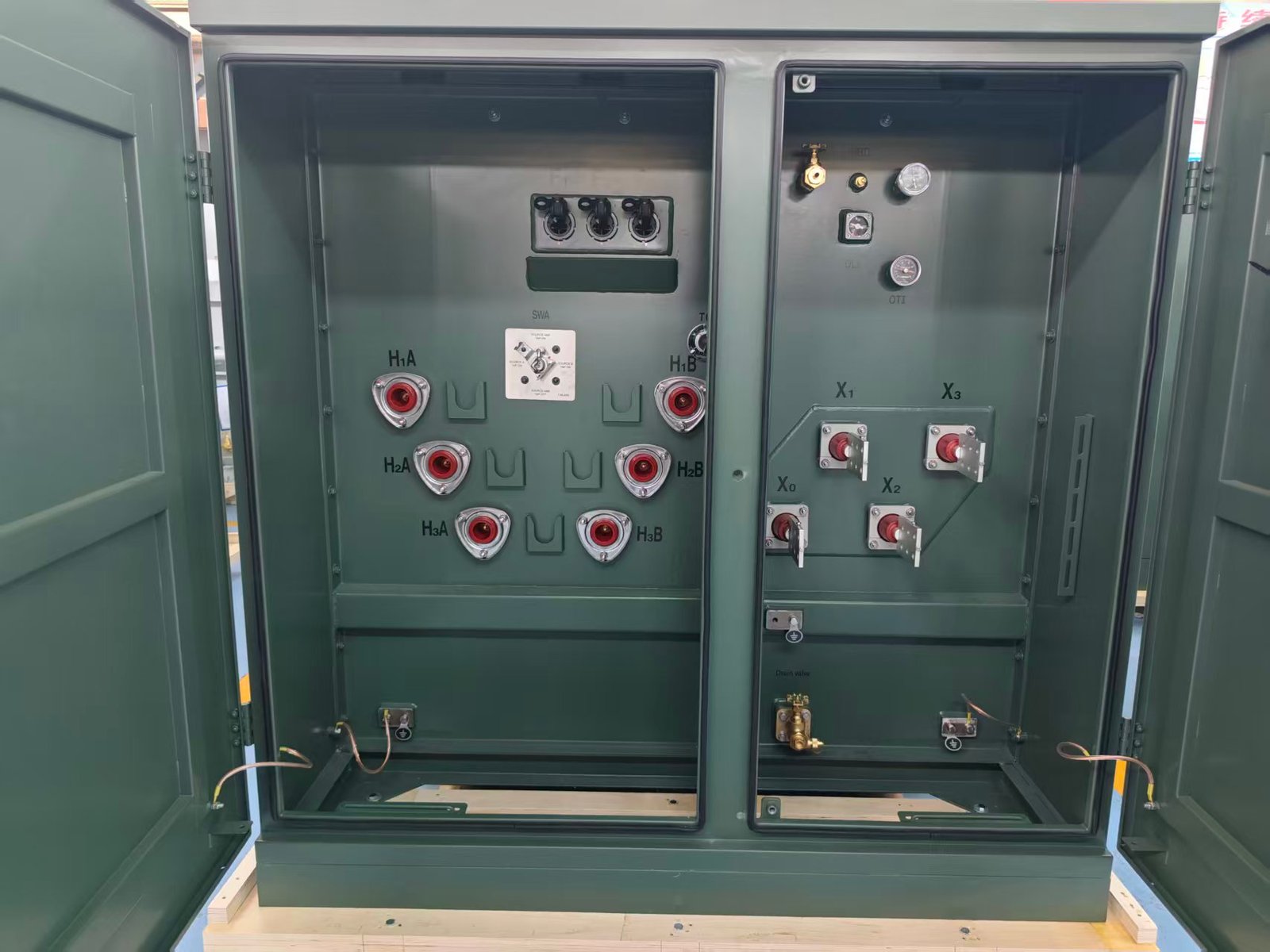
For a hot climate pad mounted transformer, monitoring accessories are not optional luxuries; they are operational necessities. Nora mandated an oil temperature gauge with a maximum indicating pointer to track peak thermal events during the hottest days. She required an oil level gauge to monitor volumetric expansion and contraction of the mineral oil.
Because high heat causes rapid pressure changes inside sealed tanks, a pressure relief valve and drain valve were mandatory. She also listed standard protection components suitable for the cable compartments, such as a bayonet fuse for overload protection and an ELSP fuse for internal fault clearing. Properly positioned grounding pads, clearly marked lifting lugs, a parking stand for insulated caps, and a durable, weather-resistant nameplate rounded out her pad mounted transformer compartments and accessories checklist.
11. Technical Parameters Checklist for Hot Climate RFQs
To ensure no detail was missed, Nora compiled her findings into a structured technical checklist for her procurement team. If you are ordering equipment for a demanding environment, you should provide the following information before quotation:
| RFQ Item | What Nora Should Provide | Why It Matters |
|---|---|---|
| Project country and site | Hot climate / tropical / desert condition | Defines the overall environmental stress. |
| Maximum ambient temperature | e.g., 45°C or 50°C (Average ambient if available) | Directly impacts cooling size and temperature rise limits. |
| Altitude | Meters above sea level | High altitude reduces air cooling efficiency and dielectric strength. |
| Humidity / dust / corrosion condition | Specific site pollutants (salt air, sand) | Determines enclosure coating, sealing, and paint standards. |
| Installation type | Outdoor pad mounted | Confirms physical layout and concrete pad constraints. |
| Rated capacity / kVA | Required power rating | Sets the physical size and core/coil dimensions. |
| Primary / Secondary voltage | Specific grid and load voltages | Fundamental electrical matching for the grid connection. |
| Phase and Frequency | Single phase or three phase, 50Hz or 60Hz | Affects core design and destination country compliance. |
| Cooling method | ONAN requirement if specified | Ensures natural thermal dissipation without pumps. |
| Temperature rise requirement | Top oil temperature rise / Average winding temperature rise / Hot spot temperature if specified | Prevents accelerated insulation aging under peak loads. |
| BIL & Short-circuit impedance | Insulation limits and impedance % | Ensures lightning protection and proper fault current control. |
| Tap changer requirement | Off-circuit tap changer | Allows manual voltage adjustment for grid variations. |
| Winding material & Oil type | Copper winding or aluminum winding, mineral oil or PCB-free oil | Affects loss targets, weight, and environmental compliance. |
| Accessory requirements | Oil temperature gauge, oil level gauge, pressure relief valve, bayonet fuse, ELSP fuse, grounding pads | Critical for safe operation, monitoring, and maintenance. |
| Cable entry & Concrete pad | Cable entry direction, drainage and maintenance access | Prevents installation misalignment and flooding issues. |
| Testing, Standards & Schedule | Testing documents, destination country standards, required delivery schedule, future expansion plan | Guarantees compliance and protects project timelines, similar to lessons in Pad Mounted Transformer Lead Time planning. |
12. How TransformerGrid Helps With Engineering Review
Navigating these thermal and electrical parameters requires specific manufacturing expertise. TransformerGrid engineers assist project managers like Nora by providing a thorough engineering review before quotation. By sending early details regarding the tropical environment, ambient temperatures, and estimated loads, our engineers evaluate whether standard designs will suffice or if specific derating or radiator expansions are necessary.
This proactive approach ensures that when the formal RFQ is generated, the technical foundation is robust, avoiding costly redesigns, test failures, or installation delays later in the process. It mirrors the planning logic required when anticipating future loads, such as discussed in the Pad Mounted Transformer for Cold Storage Warehouses and Solar Step-Up Systems.
13. Conclusion: The Value of Early Thermal Confirmation
A pad mounted transformer for hot climate and tropical projects operates on the edge of thermal limits. Nora succeeded because she recognized that simply requesting an outdoor transformer was inadequate. By systematically confirming the maximum ambient temperature, defining strict temperature rise parameters, validating the ONAN cooling method, and outlining comprehensive accessories and testing documents, she guaranteed that the manufacturer understood the true operational environment.
Engineering an electrical infrastructure for a desert or tropical region demands early technical communication. Establishing these parameters before requesting a final quotation is the most reliable way to secure an accurate delivery schedule and ensure decades of resilient power distribution.
14. Frequently Asked Questions (FAQ)
Planning a hot climate, tropical, desert, solar, industrial park or outdoor power distribution project?
Send us your project country, site environment, maximum ambient temperature, altitude, humidity or dust condition, expected kVA, primary voltage, secondary voltage, phase, frequency, cooling method requirement, temperature rise requirement, BIL, impedance, tap changer requirement, winding material, oil type, accessories, cable entry direction, concrete pad condition, testing document needs and required delivery schedule.
TransformerGrid engineers can help review your pad mounted transformer requirements before quotation.
No consulting fee. No pressure to order. Just early technical communication before your project becomes urgent.