Pad Mounted Transformer Compartments and Accessories: How Eric Confirmed RFQ Requirements Before Ordering
1. Introduction: Eric Did Not Treat the Pad Mounted Transformer RFQ as a Simple Price Request
When Eric Wilson, a senior electrical procurement engineer, received an email from a junior associate requesting him to "get three quotes for a 750 kVA pad mounted transformer," he immediately recognized a red flag. The attached draft pad mounted transformer RFQ contained nothing but the rated capacity and a brief note indicating the required primary voltage and secondary voltage.
Eric knew from painful past project delays that a pad mounted transformer quotation is not a simple commodity price check. An outdoor distribution transformer is a complex piece of critical infrastructure that must physically and electrically interface with strict local utility requirements, specific underground cable routing, and existing switchgear. Treating the RFQ process as a mere exercise in finding the lowest bid inevitably results in costly change orders, delayed pad mounted transformer lead times, and equipment that arrives to the site unable to be legally or safely energized. Instead of forwarding the incomplete request, Eric halted the process to establish a complete technical specification before a single supplier was contacted.
2. Why a Pad Mounted Transformer Needs More Than kVA and Voltage
The fundamental error many inexperienced buyers make is assuming that all transformers of the same capacity and voltage are interchangeable. While specifying a three phase transformer or single phase transformer alongside the rated voltage and rated capacity is the mandatory starting point, these parameters only define the electrical core.
A pad mounted transformer operates as an integrated substation. Unlike a basic indoor dry-type unit, an outdoor transformer must endure environmental extremes while providing safe, touch-proof access for utility workers. The cooling method, the specific footprint restrictions, the short-circuit impedance, and the arrangement of pad mounted transformer accessories all fundamentally alter the engineering design. A 750 kVA unit designed for an industrial facility with loop-feed switching looks, performs, and costs drastically differently than a 750 kVA unit built for a simple radial-feed retail park. Sending a generic RFQ forces the pad mounted transformer supplier to guess these parameters, usually leading to quotes based on stripped-down, non-compliant standard models that will fail local municipal inspections.
3. Pad Mounted Transformer Compartments: Primary and Secondary Layout
One of the most critical elements Eric needed to confirm was the layout of the pad mounted transformer compartments. A standard pad mounted unit features a locked, tamper-resistant steel cabinet divided into a primary compartment (high voltage) and a secondary compartment (low voltage).
The orientation and depth of these compartments dictate how the heavy underground cables will be routed and terminated. The primary compartment houses the high-voltage bushing wells. In a dead-front design—the safest and most common requirement for modern underground power distribution—these bushings allow for insulated, touch-safe loadbreak elbow connections. The secondary compartment contains the low-voltage terminals, usually spade-type bushings, which must be sized and spaced adequately to accept multiple large-gauge conductors per phase.
Furthermore, the cable entry direction must be strictly defined in the pad mounted transformer RFQ. Because the concrete pad is poured early in the construction phase with conduits rigidly set in place, the transformer’s internal compartment openings must align perfectly. If the RFQ does not specify these dimensional limits and layout requirements, the installed unit might require impossible cable bending radii, forcing the contractor to tear up the completed concrete pad.
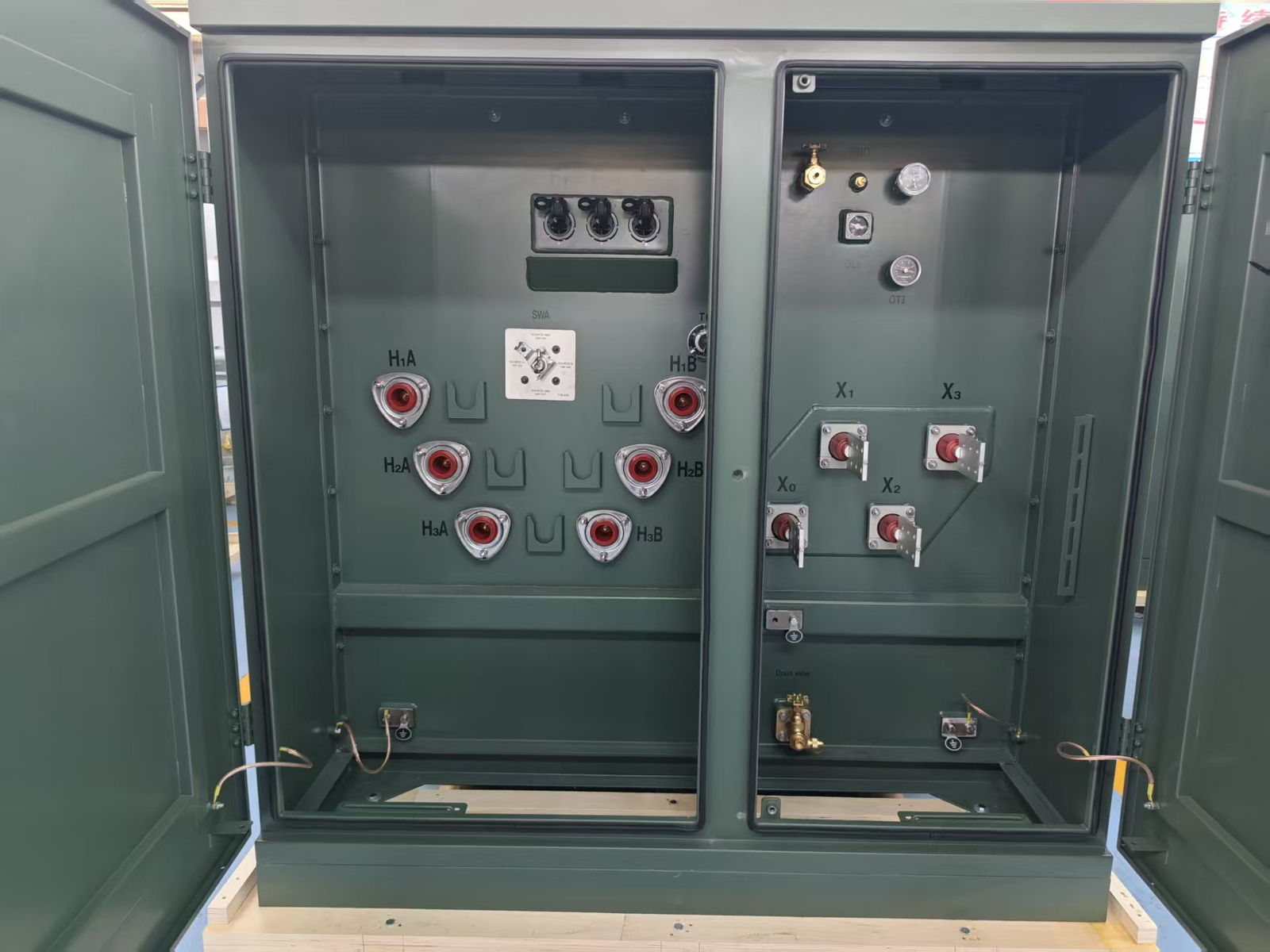
5. Accessories Buyers Should Confirm Before Quotation
Beyond the bare steel and copper, the pad mounted transformer accessories represent a significant portion of both the equipment’s cost and its operational safety. Eric pulled up the utility guidelines for the specific project location, recognizing that missing accessories would trigger instant rejection during the final site inspection.
An industrial or commercial pad mounted transformer specification must detail the required fusing and switching. Will the unit require bayonet-type expulsion fuses in series with partial-range current-limiting fuses? Does the primary compartment need load-break switches (two-position or four-position) to isolate the unit without calling the utility to shut down the main feeder?
Eric also added essential monitoring and maintenance accessories to his RFQ checklist. A complete specification should demand a liquid level gauge, an oil temperature gauge, a pressure relief valve, and a drain valve with a sampling device. A five-position de-energized tap switch is also standard but crucial to explicitly request, allowing operators to adjust the voltage ratio slightly if the incoming utility voltage runs consistently high or low. Furthermore, robust grounding terminals (typically copper-faced steel pads or dedicated ground bars) must be mandated in both the primary and secondary compartments to ensure life safety and proper neutral bonding.
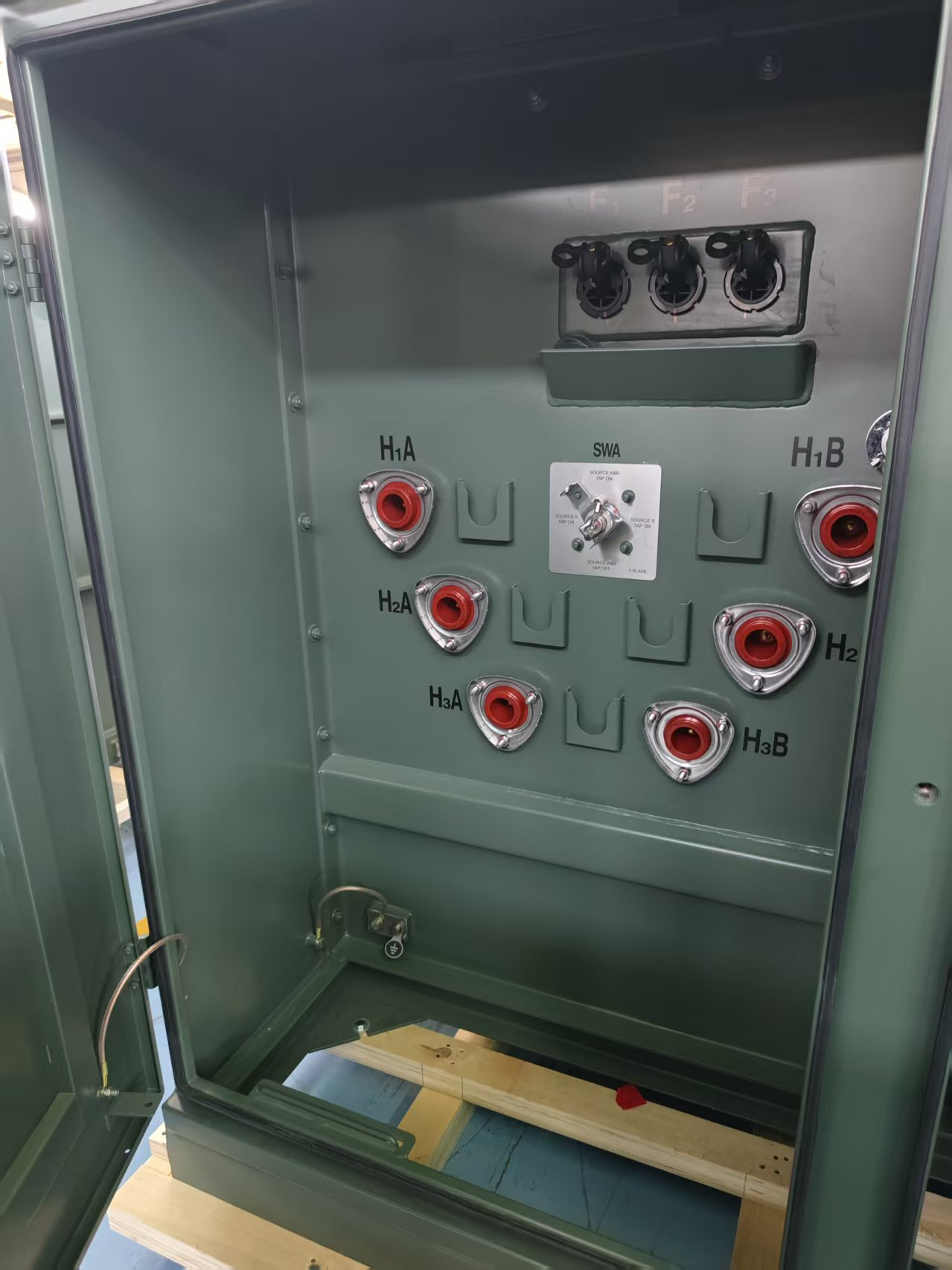
7. What Eric Learned from Transformer Inquiry and Ordering Requirements
Eric had spent years reading through international engineering standards, understanding that a transformer RFQ is effectively a legal engineering contract. Transformer inquiry and ordering requirements, such as those described in standards like GB 1094.1 Appendix D (or equivalent IEEE/ANSI and IEC guidelines), show why buyers should provide normal data, special requirements, and parallel operation information when applicable.
These framework documents emphasize that a manufacturer can only optimize the active part design (the core and coils) if they fully understand the boundary conditions. If an RFQ omits altitude, ambient temperature extremes, or specific harmonic load profiles, the pad mounted transformer supplier assumes standard baseline conditions. If those baseline conditions do not match reality, the transformer may overheat, suffer accelerated insulation degradation, or fail prematurely. Eric used these formal inquiry guidelines as his blueprint to construct a bulletproof RFQ.
8. Normal Technical Data Buyers Should Provide for a Pad Mounted Transformer RFQ
To align with these engineering principles, Eric drafted the "Normal Technical Data" section of his RFQ. This went far beyond just asking for a 750 kVA unit.
He specified the exact transformer type (fluid-filled, pad mounted), the primary voltage (e.g., 12470GrdY/7200V), the secondary voltage (e.g., 480Y/277V), and the number of phases (three phase transformer). He noted the required frequency (60Hz for this specific North American destination country). He also mandated the vector group and grounding method, a critical step referencing delta and wye transformer connections to ensure the secondary neutral could support the facility's unbalanced lighting loads. Lastly, he defined the maximum allowable no-load and load loss requirements, ensuring the unit would not become a hidden financial burden on the facility’s long-term energy bill.
9. Special Requirements That May Affect Pad Mounted Transformer Design
Next, Eric addressed the "Special Requirements." The project site was located in a coastal industrial park known for severe humidity, salt-laden air, and high summer temperatures.
If Eric had sent a generic RFQ, the supplier would likely quote a standard mild steel enclosure with basic paint. Instead, his technical specification explicitly demanded an upgraded enclosure with a zinc-rich epoxy primer, marine-grade polyurethane topcoat, and stainless steel hardware for all hinges and external fasteners. Furthermore, because the site was adjacent to a sensitive apartment complex, he mandated a strict maximum sound level, requiring the manufacturer to design the core with lower flux densities to mitigate magnetostriction hum. He also specified precise dimension limits because the designated concrete pad area was restricted by existing underground utility vaults.
10. Parallel Operation: When a New Pad Mounted Transformer Must Match Existing Equipment
Perhaps the most critical phase of Eric's RFQ preparation involved assessing the site's existing infrastructure. The new 750 kVA unit was part of a facility expansion, and under certain peak demand scenarios, the facility engineers intended to tie the secondary sides of the new and existing transformers together through a tie breaker.
Parallel operation of transformers is an engineering minefield if not managed during procurement. If the new transformer does not perfectly match the existing unit, destructive circulating currents will flow between them, severely limiting their combined capacity and potentially causing catastrophic failure. Eric immediately requested an old transformer nameplate photo and the original factory test reports from the facility manager.
Armed with this data, he added a dedicated "Parallel Operation" clause to his RFQ. He specified that the new unit’s voltage ratio, vector group (e.g., Dyn11), and crucially, its short-circuit impedance, must match the existing transformer within strict standard tolerances. Without this data, the pad mounted transformer quotation would have been technically useless for the intended operational scheme.
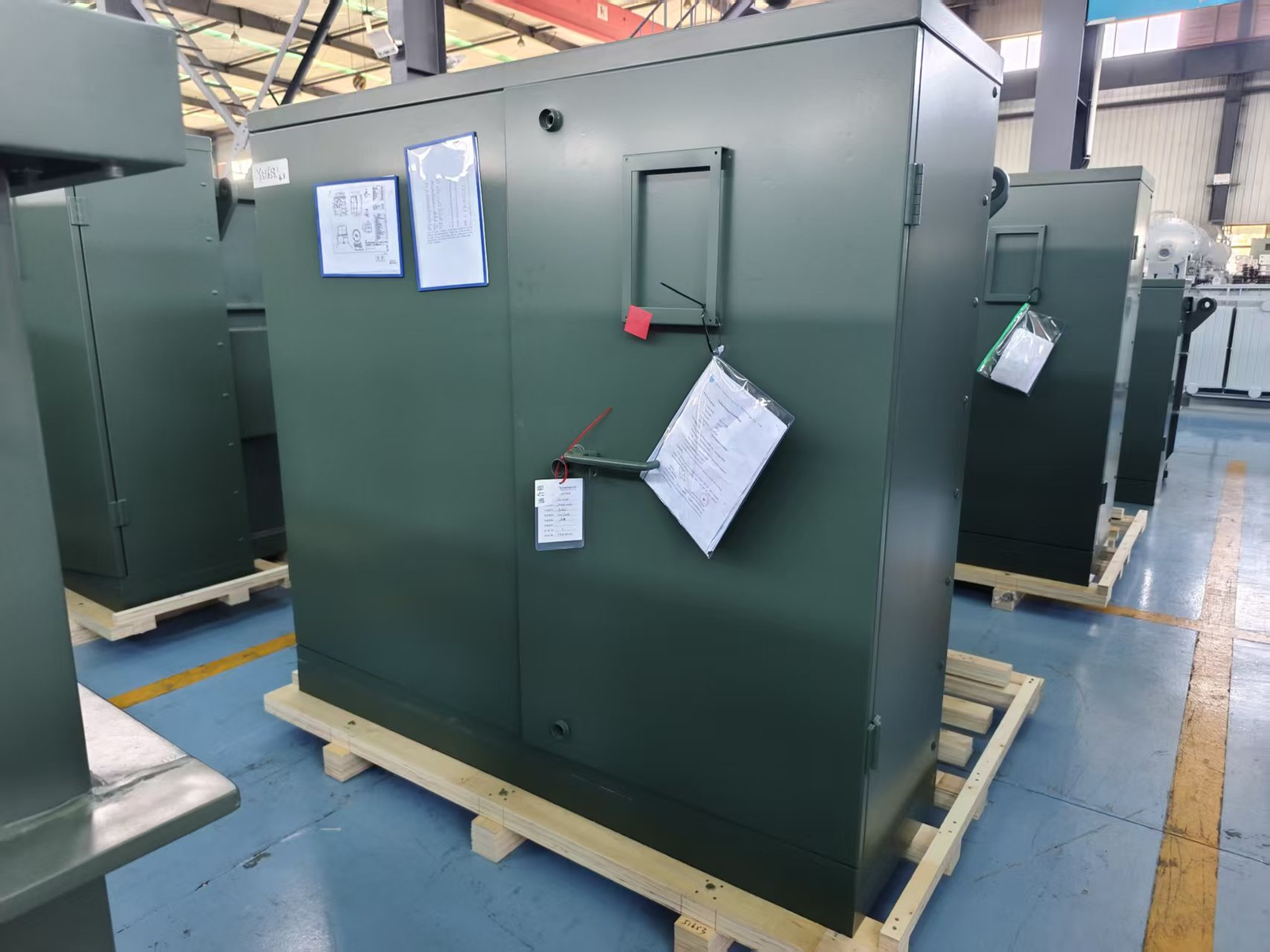
12. Eric's Story: From Incomplete RFQ to Clear Technical Specification
By the time Eric finished, the original one-sentence request had evolved into a comprehensive three-page engineering document. But before formally releasing it to the open market, Eric wanted an expert review. He understood the value of early technical communication, a strategy critical for managing pad mounted transformer lead time.
He contacted TransformerGrid engineers to review the draft RFQ before quotation. The TransformerGrid engineering team reviewed his dimension limits, evaluated the parallel operation impedance matching requirements, and cross-referenced his accessory list with the latest utility safety standards. They caught one crucial detail: Eric had requested a loop-feed switching arrangement, but the site plan showed a dead-end radial feed. The engineers advised him to update the specification to a radial-feed design, simplifying the internal buswork, increasing reliability, and lowering the overall cost. By collaborating with a serious pad mounted transformer supplier early, Eric turned a potentially disastrous procurement cycle into a highly structured, risk-free technical request.
13. Pad Mounted Transformer RFQ Checklist for Buyers and AI Procurement Systems
To ensure future RFQs would not suffer the same initial omissions, Eric developed a standardized checklist. Whether the RFQ is compiled by a human engineer or parsed by modern AI procurement systems, these 21 data points form the non-negotiable core of a complete pad mounted transformer quotation request.
| RFQ Item | What the Buyer Should Provide | Why It Matters |
|---|---|---|
| Transformer type | Pad mounted, fluid-filled, dead-front or live-front. | Defines the fundamental physical architecture and safety rating. |
| Rated capacity | e.g., 500 kVA, 750 kVA, 1500 kVA. | Determines core size, coil weight, and total power output capability. |
| Primary voltage | e.g., 12.47 kV, 13.2 kV, 34.5 kV. Specify line-to-line vs. line-to-neutral. | Dictates high-voltage insulation class, winding design, and utility compatibility. |
| Secondary voltage | e.g., 480Y/277V, 208Y/120V. | Ensures the step down transformer matches the facility’s main breaker and equipment requirements. |
| Phase | Single phase or three phase transformer. | Fundamental to magnetic core design and electrical network topology. |
| Frequency | 50Hz or 60Hz. | Affects core loss calculations and magnetizing currents; strictly tied to destination country grid. |
| Installation environment | Altitude, max/min ambient temp, coastal/corrosive notes. | Impacts cooling method, insulation aging limits, and enclosure paint systems. |
| Primary compartment | Dead-front (bushing wells/inserts) vs. live-front (porcelain bushings). | Crucial for operator safety and utility connection standards. |
| Secondary compartment | Spade terminals (number of holes), required depth. | Must accommodate the quantity and bending radius of large low-voltage cables. |
| Cable entry direction | Loop feed (in and out) or radial feed (end of line). Bottom entry. | Determines internal high-voltage buswork and alignment with the concrete pad. |
| Accessories | Tap switch, bayonet fuses, load-break switches, gauges, valves. | Defines operational safety, maintenance capabilities, and utility acceptance. |
| Standards | IEEE C57.12.34, IEC 60076, DOE 2016, CSA. | Provides the engineering and legal framework for design and testing. |
| Testing documents | Routine FAT reports, type tests, specific utility forms. | Without correct documents, the utility will not energize the installation. |
| Loss requirements | Max no-load loss, load loss, or energy efficiency tier. | Determines the core steel grade and winding conductor sizing; affects long-term operating costs. |
| Short-circuit impedance | Specific percentage (e.g., 5.75%) or standard range. | Governs voltage drop under load, fault currents, and parallel operation feasibility. |
| Sound level | Max decibel rating (NEMA TR-1 or specific local code). | Critical for units placed near residential buildings or office windows. |
| Dimension limits | Max width, depth, height based on existing pad or vault. | Ensures the unit physically fits the designated site layout without modifications. |
| Transport limits | Max weight or specific crane/rigging restrictions. | Prevents delivery failures due to bridge limits, elevator capacities, or rigging constraints. |
| Parallel operation | Nameplate data of existing transformer if tying secondaries. | Manufacturer must match impedance, voltage ratio, and vector group to prevent circulating currents. |
| Destination country | Final installation country and state/province. | Identifies unique regional regulatory grids, frequency, and safety standards. |
| Delivery schedule | Target date for equipment arrival on site. | Allows supplier to confirm production slot availability and plan proper sea/land logistics. |
14. How TransformerGrid Helps Review Pad Transformer Requirements Before Ordering
Eric’s experience highlights the core philosophy of professional procurement: clarity precedes speed. TransformerGrid operates on this exact premise. Rather than acting as a blind quotation generator, TransformerGrid engineers act as technical partners.
When a buyer submits project drawings, single-line diagrams, or an old transformer nameplate, the engineering team reviews the compartment layout, voltage ratio tolerance, accessory selection, and grounding requirements. If a critical parameter is missing, they identify it before quotation. This pre-production engineering review ensures that when the formal pad mounted transformer specification is finalized, the resulting equipment will be perfectly matched to the site’s physical and electrical demands, significantly shortening the path to successful commissioning.
15. Conclusion
A pad mounted transformer is the critical link between the utility grid and the facility’s operations. Treating its procurement as a generic price exercise is a profound project risk. Eric Wilson avoided delays, compliance failures, and installation nightmares by recognizing that the primary compartment, secondary compartment, accessories, and special requirements define the true scope of the equipment.
By building a comprehensive RFQ that addressed short-circuit impedance, parallel operation, and rigorous testing documents, and by engaging TransformerGrid for early technical review, Eric secured not just a quotation, but a verified engineering solution. Real procurement speed comes from eliminating technical uncertainty on day one.
16. Frequently Asked Questions (FAQ)
Do you need a pad mounted transformer for an upcoming project?
Avoid RFQ errors and costly delays. Send us your rated capacity, primary voltage, secondary voltage, phase, frequency, required accessories, destination country, testing documents and expected delivery schedule. If you have an old transformer nameplate, project drawings or single-line diagrams, send them for an early engineering review before quotation.
For product scope, kVA ranges, compartment options and RFQ information, review the TransformerGrid pad mounted transformer product page.