Pad Mounted Transformer for University Campuses: How Hannah Planned Dormitories, Labs, Protection Relays and Rooftop Solar Power
Introduction: Hannah Was Planning Campus Power, Not Just Buying a Transformer
Hannah Vance, a senior electrical facilities manager at a rapidly expanding state university, had a demanding mandate: coordinate the electrical distribution for a new 40-acre campus expansion. The expansion included three new high-capacity dormitories, a state-of-the-art research laboratory building, and a multi-story student center. Her responsibility extended far beyond simply finding a supplier for a pad mounted transformer. She was tasked with establishing a resilient, safe, and future-proof electrical foundation.
Hannah knew that university campus power distribution projects involve immense complexity. She had to evaluate highly variable student loads, ultra-sensitive laboratory equipment requirements, integrated secondary circuit schemes, specific relay protection device selections, and the physical safety of thousands of students moving around the equipment daily. Adding to the challenge was the university's mandate to integrate rooftop solar power and future electric vehicle infrastructure. This guide details how Hannah systematically planned her campus electrical expansion, navigating from raw load calculations to a comprehensive RFQ that prevented delivery delays and guaranteed technical compliance.
Why Campus Power Distribution Needs Careful Transformer Planning
A university campus operates much like a small, self-contained city. The power grid must support diverse infrastructure ranging from residential housing and commercial food service to high-tech industrial research and administrative offices. Unlike a standalone warehouse, where power demands follow predictable shifts, campus power distribution deals with irregular, continuous, and highly diverse load profiles that operate 24 hours a day, 7 days a week.
Transformer failures on a university campus do not just halt production—they displace thousands of resident students, ruin sensitive ongoing scientific research, disable campus-wide security networks, and shut down essential food storage facilities. Therefore, specifying a pad mounted transformer for this environment requires rigorous calculation of total capacity, meticulous phase alignment, robust cooling designs, and an extensive understanding of how local utility feeds interface with the university's internal medium-voltage loops.
Dormitories, Classrooms and Daily Campus Loads
The foundation of the electrical calculation begins with the bulk of the campus footprint: dormitories and general academic buildings. Modern student dormitories represent a heavily concentrated electrical demand. Thousands of students simultaneously use personal computers, high-wattage hair dryers, gaming consoles, microwaves, and mini-refrigerators. This creates sharp, unpredictable peak demands, particularly in the early morning and late evening.
Classrooms and lecture halls contribute heavily to the daytime baseline load. Massive centralized HVAC systems, widespread LED lighting arrays, and hundreds of interactive digital displays draw continuous power. To handle this, Hannah had to carefully calculate diversity factors—understanding that not every load operates at maximum simultaneously—while still reserving enough overhead capacity to prevent the transformer from overheating during high-stress periods like exam weeks in the middle of summer or winter. Determining whether the facility required a step up or step down transformer connection from the campus internal medium-voltage loop was the first critical technical step.
Laboratories and Special Loads: Why Stable Power Matters
While dormitories demand raw capacity, campus research laboratories demand extraordinary power quality and stability. The new laboratory building in Hannah's expansion plan housed scanning electron microscopes, sensitive mass spectrometers, clean rooms, and extensive biological cold storage facilities containing years of irreplaceable research.
These special loads cannot tolerate severe voltage sags, harmonic distortion, or prolonged outages. Large mechanical loads in the same building, such as heavy-duty fume hood exhaust fans and high-capacity chillers, use variable frequency drives (VFDs) that can introduce harmful harmonics back into the electrical supply. Hannah recognized that her pad mounted transformer specification required robust K-factor ratings to mitigate harmonic heating and needed exact delta and wye transformer connections to ensure a solid, clean neutral ground reference for the sensitive scientific instruments.
Secondary Circuit Scheme: Why Campus Transformer Projects Need More Than Primary Equipment
Many inexperienced buyers focus entirely on the transformer's core and coils, neglecting the complex equipment required immediately downstream. A high-capacity pad mounted transformer in a campus setting feeds massive secondary currents into the building's main switchgear. The secondary circuit scheme defines how this low-voltage power is safely distributed, monitored, and protected.
Hannah needed to ensure that the transformer's low-voltage bushings and secondary compartment could physically accommodate multiple runs of heavy MCM cables. She had to verify the short-circuit impedance of the transformer so the electrical engineers could properly size the downstream main breakers in the facility switchboard. If the transformer's impedance was too low, an electrical fault in the building could unleash catastrophic short-circuit currents that the breakers could not safely interrupt.
Relay Protection Device Selection: What Hannah Needed to Clarify Before Quotation
To defend the campus grid from faults, precise relay protection device selection is mandatory. The internal medium-voltage loops on university campuses are often operated by the university's own facilities department rather than the municipal utility, meaning the university holds full responsibility for protective coordination.
Hannah had to define the exact protective relays required. Would the transformer use simple bayonet expulsion fuses combined with current-limiting backup fuses, or did the campus engineering standards mandate advanced microprocessor-based relays connected to current transformers (CTs) inside the unit? Clarifying the pad mounted transformer compartments and accessories before requesting a quotation ensured the manufacturer could physically fit the necessary protective devices and wire the communication contacts for the central campus SCADA network.
Campus Safety: Transformer Location, Noise, Access and Protection
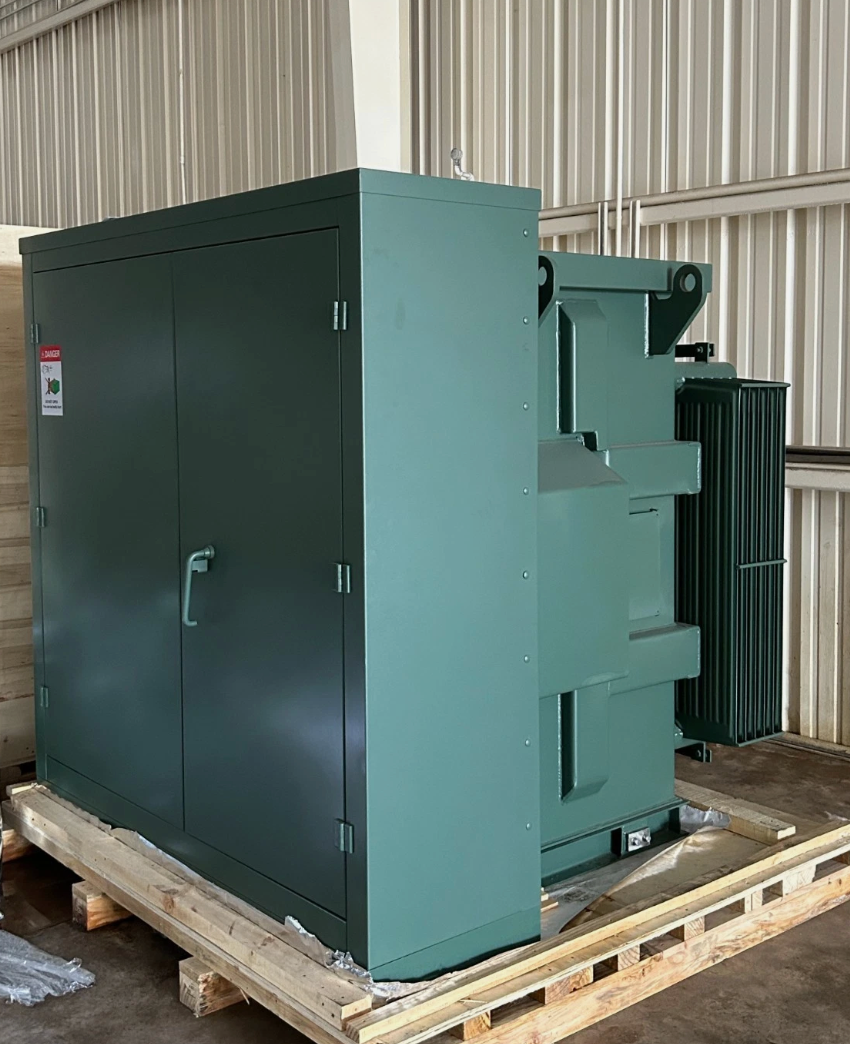
University campuses host thousands of young adults, necessitating extremely strict safety protocols for high-voltage equipment. The location of the pad mounted transformer must balance the need to be close to the electrical load (to minimize expensive secondary cable runs) with the need to be physically isolated from student gathering areas.
Hannah evaluated noise emission regulations, knowing that a loudly humming transformer placed outside a dormitory window would trigger constant complaints. She specified low-noise core construction. Furthermore, the physical enclosure had to be tamper-resistant, featuring heavy-duty penta-head bolts and padlock provisions to prevent unauthorized access. The location also required protective steel bollards to defend the unit from erratic student drivers and heavy campus maintenance vehicles, while still leaving adequate clearance for utility bucket trucks.
Rooftop Solar, Energy Storage and Future EV Charging Planning
The university's board of regents had issued a strict sustainability mandate: all new buildings must integrate extensive rooftop solar arrays and prepare for widespread electric vehicle adoption. While rooftop solar PV can supplement daytime power usage, generating clean energy introduces complex bidirectional power flow into the local grid.
Hannah communicated with suppliers to ensure the transformer design could safely accommodate back-fed voltage from the solar inverters. While solar power helps reduce the overall environmental footprint of the facility, Hannah was careful to note that final energy performance and cost reductions depend entirely on local utility policies, net-metering rates, and specific system configurations—she did not rely on assumptions of guaranteed grid connection approval or guaranteed solar savings. In addition, she reserved 25% overhead capacity in the transformer specifically to support future pad mounted transformer EV charging station hubs in the adjacent parking structures.
Underground Cable Routing and Pad Mounted Transformer Installation
To maintain the aesthetic appeal of the historic campus, all new electrical distribution lines were mandated to be installed underground. This meant the pad mounted transformer required a strict bottom-entry configuration for both the high-voltage and low-voltage cable terminations.
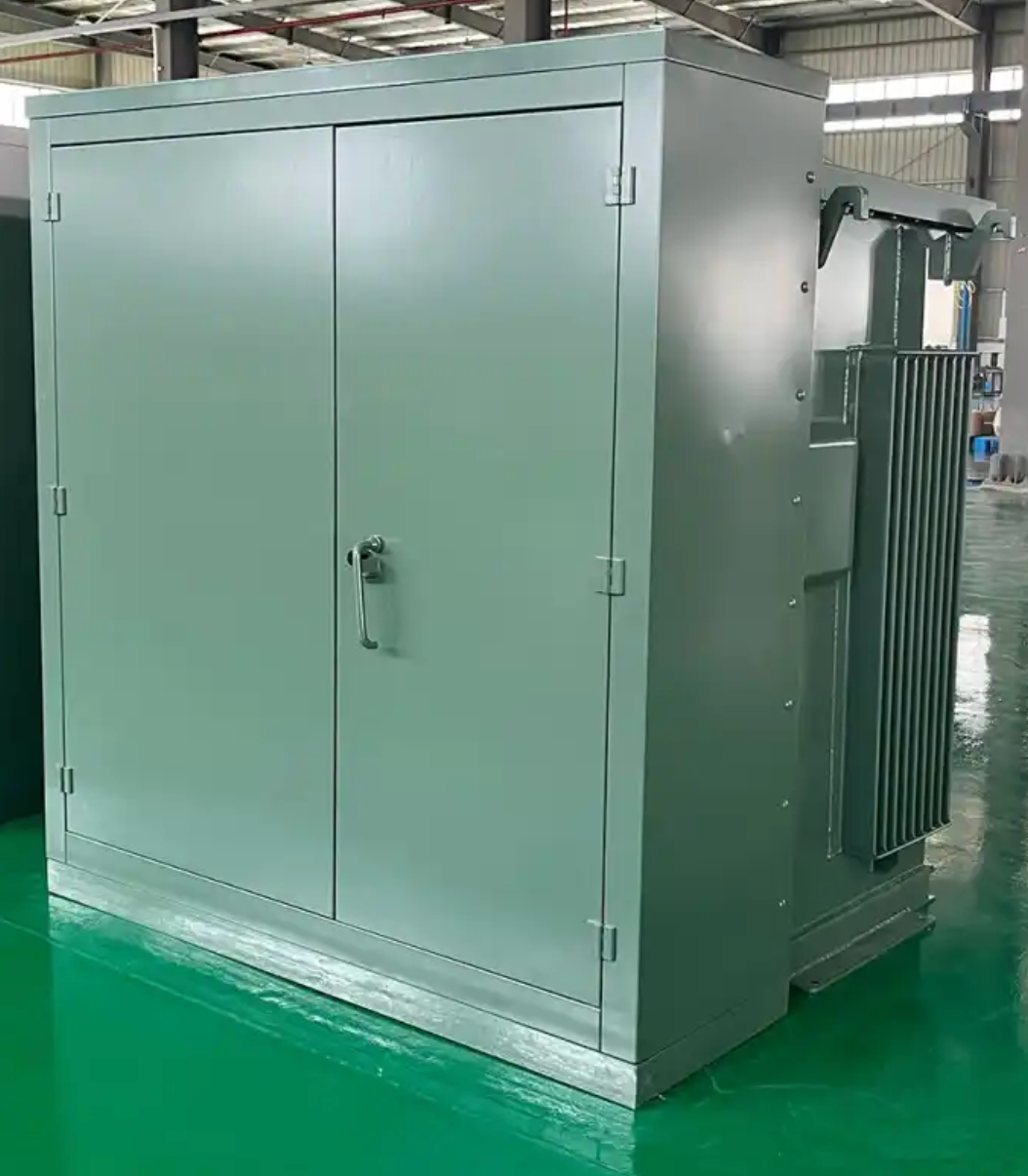
Properly planning the pad mounted transformer dimensions and concrete pad is a critical phase of civil engineering. The concrete foundation must feature precisely measured cutouts aligned perfectly with the heavy PVC conduits rising from the ground. If the incoming rigid conduits do not match the bottom opening of the transformer cabinet, the stiff, heavy high-voltage cables cannot be connected safely, resulting in expensive site rework. Hannah verified the exact cable entry direction and physical dimensions with the manufacturer long before the concrete contractors poured the foundation.
Hannah's Story: From Campus Expansion Plan to a Clear Pad Transformer RFQ
When Hannah first received the electrical expansion mandate, she faced immense pressure from the construction management team to "just order the equipment" to meet the aggressive building schedule. However, she had seen other facilities managers suffer from unexpected pad mounted transformer lead time delays because they submitted vague requests that required weeks of back-and-forth clarification.
Instead of rushing, Hannah paused to build a comprehensive technical profile. She coordinated with the laboratory researchers to understand their sensitive load requirements, aligned with the sustainability office regarding the solar inverter outputs, and verified the primary voltage and protection scheme with the campus high-voltage maintenance crew. By investing the time to define these parameters early, Hannah transformed a high-risk procurement task into a clear, engineered RFQ that left no room for manufacturing ambiguity.
What Hannah Sent Before Requesting a Quotation
To ensure absolute clarity and expedite the engineering review process, Hannah prepared a highly structured technical package. Before formally requesting a price, she provided the supplier with the following critical details:
- Detailed campus expansion site layout maps
- Comprehensive load distribution calculations (dormitories vs. laboratories)
- Expected transformer capacity in kVA (with reserved overhead for EV charging)
- Exact primary voltage of the internal campus loop
- Required secondary voltage for the new buildings
- Phase requirements (three-phase) and operating frequency
- Laboratory power quality and K-factor harmonic requirements
- Secondary circuit scheme and switchgear interface data
- Specific relay protection device selections and fusing requirements
- Rooftop solar PV integration and bidirectional flow parameters
- Underground cable routing paths and cable entry direction
- Proposed concrete pad dimensions and structural limits
- Required tamper-resistant safety enclosures and noise limits
- Specific testing documents required for university commissioning
- Required delivery schedule to match the construction phases
RFQ Checklist for Campus Pad Mounted Transformer Projects
To help other institutional buyers organize their requirements, Hannah developed the following standardized RFQ checklist for university infrastructure procurement.
| RFQ Item | What Hannah Should Provide | Why It Matters |
|---|---|---|
| Campus site layout | Detailed maps of dormitories, labs, and pathways. | Identifies physical location, access constraints, and proximity to students. |
| Load distribution calculations | Breakdown of residential, HVAC, and commercial loads. | Determines the core thermal capacity required to prevent overheating. |
| Expected capacity (kVA) | Total calculated demand plus 25% overhead. | Dictates the physical size, core design, and baseline cost of the unit. |
| Primary voltage | Voltage of the campus medium-voltage distribution loop. | Defines the high-voltage insulation class and bushing configuration. |
| Secondary voltage | Building operating voltage (e.g., 480Y/277V). | Ensures seamless connection to the building's main switchgear. |
| Phase and frequency | Three-phase setup and grid frequency (50Hz or 60Hz). | Fundamental for matching the regional power grid and internal systems. |
| Laboratory power requirements | Clean power specs, K-factor needs, and vector group. | Protects sensitive scientific instruments from harmonic distortion and voltage sags. |
| Secondary circuit scheme | Data on main breakers and short-circuit impedance. | Coordinates the transformer with downstream low-voltage protection equipment. |
| Relay protection selection | Specs for fuses or microprocessor relays and CTs. | Allows the manufacturer to integrate required protective hardware directly at the factory. |
| Rooftop solar integration | Details of the proposed PV array and inverter output. | Ensures the unit safely supports bidirectional power flow. |
| Underground cable routing | Pathways for incoming and outgoing high-voltage lines. | Guides the orientation of the pad and access doors. |
| Cable entry direction | Bottom-entry configuration specifics. | Ensures transformer cabinet openings align perfectly with foundational conduits. |
| Concrete pad dimensions | Site drawings showing the structural foundation. | Prevents delivery of equipment that physically cannot fit the prepared site. |
| Safety and noise limits | Tamper-resistant specs and low-noise core requirements. | Mandatory for public campus safety and dormitory livability. |
| Testing documents | List of required FAT reports and compliance standards. | Crucial for final inspection and facility handover to the university. |
| Delivery schedule | Target arrival date coordinated with construction. | Allows the supplier to allocate production slots to meet aggressive deadlines. |
How TransformerGrid Helps Review Campus Transformer Requirements
Managing electrical procurement for a high-stakes university expansion is not a task you should face alone. Partnering with experienced engineers ensures that complex relay protection schemes, laboratory load requirements, and physical dimensional constraints are fully validated before equipment is manufactured.
If you are planning similar institutional infrastructure, TransformerGrid engineers can help review campus transformer requirements before quotation. By submitting your site plans, expected capacities, primary voltage, secondary circuit scheme, and solar integration details, our technical team provides a thorough evaluation to prevent costly specification errors. There is no consulting fee and no pressure to order—just reliable early technical communication. today to secure a safe and resilient power foundation for your facility.
Conclusion
Selecting a pad mounted transformer for a university campus demands a rigorous, multi-disciplinary approach. From anticipating the concentrated peak loads of modern dormitories to defending sensitive laboratory equipment and integrating future rooftop solar arrays, the electrical foundation must be flawlessly engineered.
By systematically compiling load profiles, determining exact voltage parameters, clarifying relay protection schemes, and designing precise underground cable routing prior to requesting a quotation, facility managers can eliminate the risks of delivery delays and technical incompatibilities. Early collaboration with experienced transformer engineers ensures that the equipment delivered provides decades of safe, resilient power for the entire academic community.
Frequently Asked Questions
Ready to Plan Your Campus Power Project?
Planning an institutional facility, university campus or educational power project?
Send us your site layout, facility expansion drawings, load calculations, expected kVA, primary voltage, secondary voltage, phase, frequency, cable routing, cable entry direction, relay protection needs, solar integration details, testing document needs and required delivery schedule.
TransformerGrid engineers can help review your pad mounted transformer requirements before quotation.
No consulting fee. No pressure to order. Just early technical communication before your project becomes urgent.
For product scope, kVA ranges, compartment options and RFQ information, review the TransformerGrid pad mounted transformer product page.