The Transformer Was Healthy. Why Did Protection Trip at Energization?
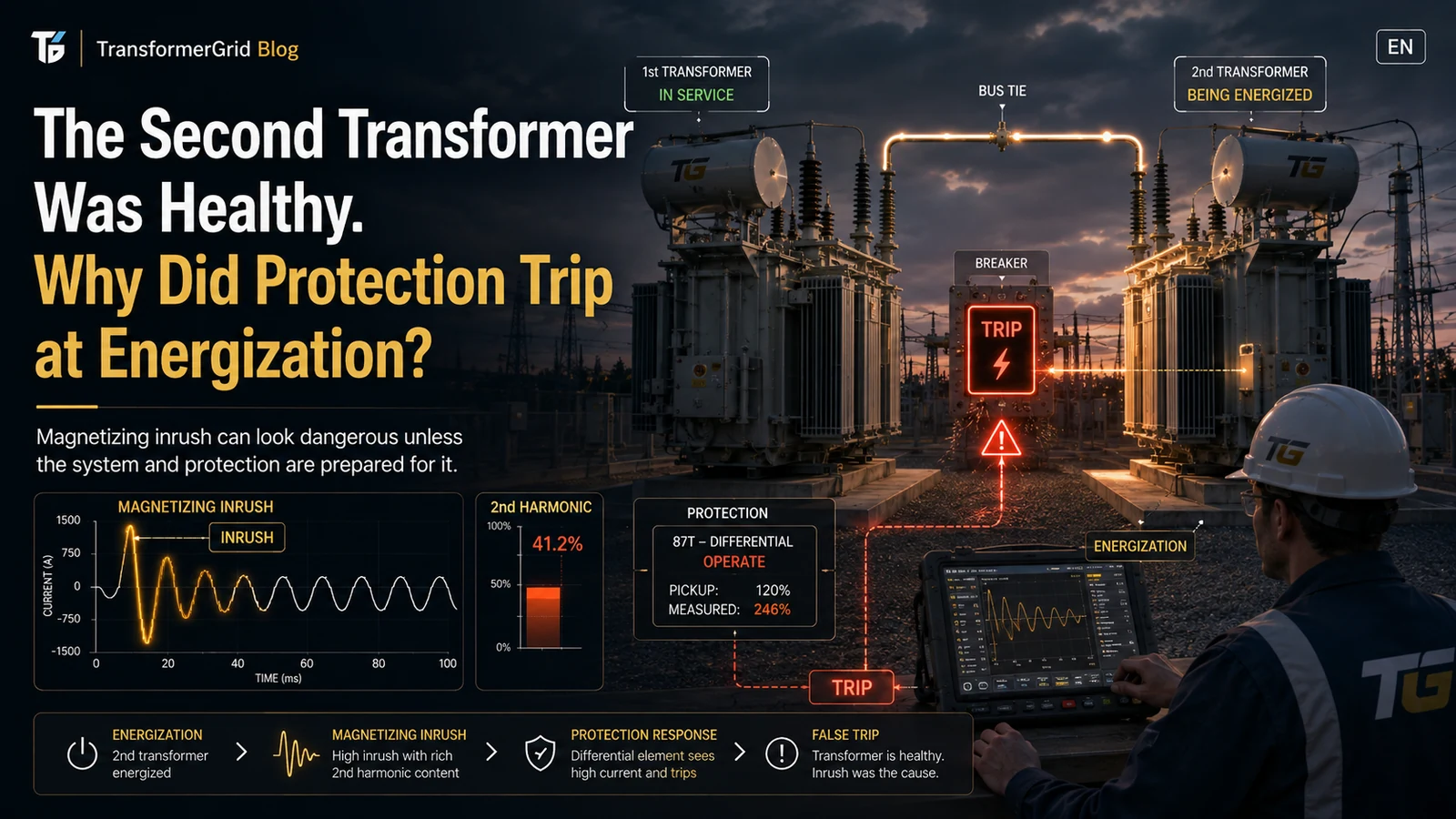
The moment every supplier hates: the new transformer trips on the first close
The new transformer reached site. Insulation checks looked normal. FAT was complete. Wiring was reviewed. The breaker closed for the first energization — and protection operated.
The buyer’s first reaction was reasonable: “Is something wrong with the new transformer?” The manufacturer’s first reaction was equally predictable: “Everything passed at the factory.”
If the conversation becomes only a fight over whose equipment is defective, the real question can be missed. TransformerGrid wants to know whether the event is an internal fault or energization inrush, and whether the protection scheme was prepared to distinguish the two.
Why we talk about the first close before the transformer ships
Some suppliers treat FAT PASS as the end of their engineering responsibility. We do not like that boundary. The customer does not need a transformer that only behaves correctly in a factory bay. The customer needs equipment that can enter the real system.
Magnetizing inrush is a classic interface issue. A healthy transformer can draw a very large transient current when energized. The project protection team must distinguish expected transient behavior from a genuine internal fault.
TransformerGrid focuses on whether transformer data, CT interfaces, protection philosophy and commissioning requirements were brought together early enough.
We do not set the relay — and we do not let manufacturing pretend the relay does not exist
Protection settings must be determined by qualified project engineers. TransformerGrid will not tell a buyer to change a relay setting from a blog post.
Our job is different. We push for complete manufacturing-side inputs: transformer parameters, connection data, CT and accessory interfaces, relevant test documents and information needed by the protection and commissioning team.
When a customer asks about energization behavior, our answer should never end with “FAT passed.” The seam between equipment and system is where project risk often hides, so we watch the seam.
We want fewer surprises after the crane and outage window arrive
The most expensive surprises happen after the equipment is already on site, the crew is mobilized and the outage window has started.
If the project’s energization and parallel-operating philosophy is clear during procurement, protection and commissioning teams can prepare earlier. If the second transformer changes the protection scenario only at the last minute, even a perfectly healthy transformer can become the center of a project delay.
TransformerGrid’s rule is simple: if the problem can be moved from the site back into the drawing-and-data stage, move it.
What we want buyers to remember
No internal fault does not mean no high current. FAT PASS does not mean the whole system is ready.
TransformerGrid’s value is not that we always say “no problem.” It is that when an interface is not yet confirmed, we are willing to say so.
In industrial procurement, exposing a question early is often more valuable than pretending everything is already solved.
Why buyers remember TransformerGrid
- We review the existing system, not only the new nameplate.
- We surface open technical items before production whenever possible.
- We coordinate manufacturing-side drawings and data through a verified manufacturing partner.
- We do not replace the EPC or consultant; we make their review easier with better-organized inputs.
Project Action
If the project includes energizing a second transformer, automatic transfer, a bus tie or differential protection, include the one-line diagram, transformer parameters, CT/relay interfaces and commissioning philosophy in procurement communication. TransformerGrid can organize manufacturing-side data and interfaces for the protection and commissioning team to review.
Selected for State Grid projects. Proven across extreme climates.
Manufacturing experience backed by documented project awards through a verified manufacturing partner.
Buying or sourcing a transformer? Contact:
WhatsApp: +86 176 8746 9988