Pad Mounted Transformer for Apartment Complexes: How Daniel Planned Safe Underground Power Before Occupancy
1. Introduction: Daniel Protecting Occupancy, Not Just Buying a Transformer
In the high-stakes world of residential development, the timeline is everything. Daniel Brooks, a senior project manager for a massive multi-phase residential community, knew that his most critical deadline was not the framing or the drywall—it was the occupancy permit. Without permanent, reliable power, local municipalities will not issue a Certificate of Occupancy. Without that certificate, residents cannot move in, rent cannot be collected, and the financial weight of the project begins to crush the developer.
Daniel wasn't just tasked with buying an pad mounted transformer; he was tasked with protecting the project's financial viability. He recognized early on that an apartment complex transformer is a highly specialized piece of equipment that requires meticulous planning. Navigating primary voltage inputs, secondary voltage outputs, and strict utility guidelines cannot be done at the last minute. By focusing on early technical communication and an engineering review before quotation, Daniel shielded his project from the severe supply chain delays that routinely plague the construction sector.
2. Why Apartment Complexes Use Pad Mounted Transformers
Modern residential development has largely abandoned overhead power lines in favor of underground power distribution. The reasons are multifold: aesthetics, safety, and weather resilience. A residential pad mounted transformer is specifically designed to integrate seamlessly into this underground infrastructure.
Unlike older pole-mounted equipment that clutters the skyline and remains vulnerable to high winds, falling tree branches, and ice storms, a pad mounted transformer for residential community applications sits securely on a concrete pad at ground level. These units feature tamper-proof, locked steel enclosures with isolated high-voltage and low-voltage compartments, making them safe for installation near sidewalks, parking lots, and landscaping. Furthermore, because a multi-unit apartment building requires significant electrical capacity—often necessitating a 500kVA pad mount transformer or larger—the physical weight and size of the equipment make ground-level pad mounting the only practical engineering solution.
3. Daniel's Main Concern: Occupancy Cannot Wait for Delays
As Daniel reviewed the master schedule, the reality of the pad mounted transformer delivery time loomed large. A delay of even three weeks in receiving the transformer would cascade through the rest of the schedule. The electrical contractor couldn't finish the main switchgear tie-in, the HVAC systems couldn't undergo commissioning, and the elevator inspectors wouldn't even arrive without permanent three phase power active in the building.
Daniel had seen other developers wait until the final building load schedule was stamped by the city before requesting a pad mounted transformer quotation. This reactive approach meant the developer absorbed the entire manufacturing lead time at the absolute worst moment of the project. Daniel's core philosophy was proactive risk management: the residential power planning should start before the occupancy pressure arrives.
4. What Daniel Needed to Confirm Before Ordering
To secure a reliable pad mounted transformer supplier and lock in an accurate delivery schedule, Daniel knew he had to move past generic price hunting. Requesting a random 100 kVA pad mounted transformer price would not give him the engineering certainty he needed for a much larger apartment complex.
Instead, Daniel collaborated with his electrical engineer to compile a robust technical profile. He needed to confirm the exact kVA capacity based on the building load schedule. He had to verify whether the local grid required a specific step up or step down transformer configuration, confirming the primary voltage from the utility and the precise secondary voltage required by the building's main breaker. He also had to address the delta and wye transformer connections, ensuring the secondary side provided a solid neutral for the residential 120/240V split-phase or 208Y/120V three phase loads. Furthermore, he needed to document the destination country regulations and specific utility testing documents required for final grid handover.
6. Underground Cable Routing and Cable Entry Direction
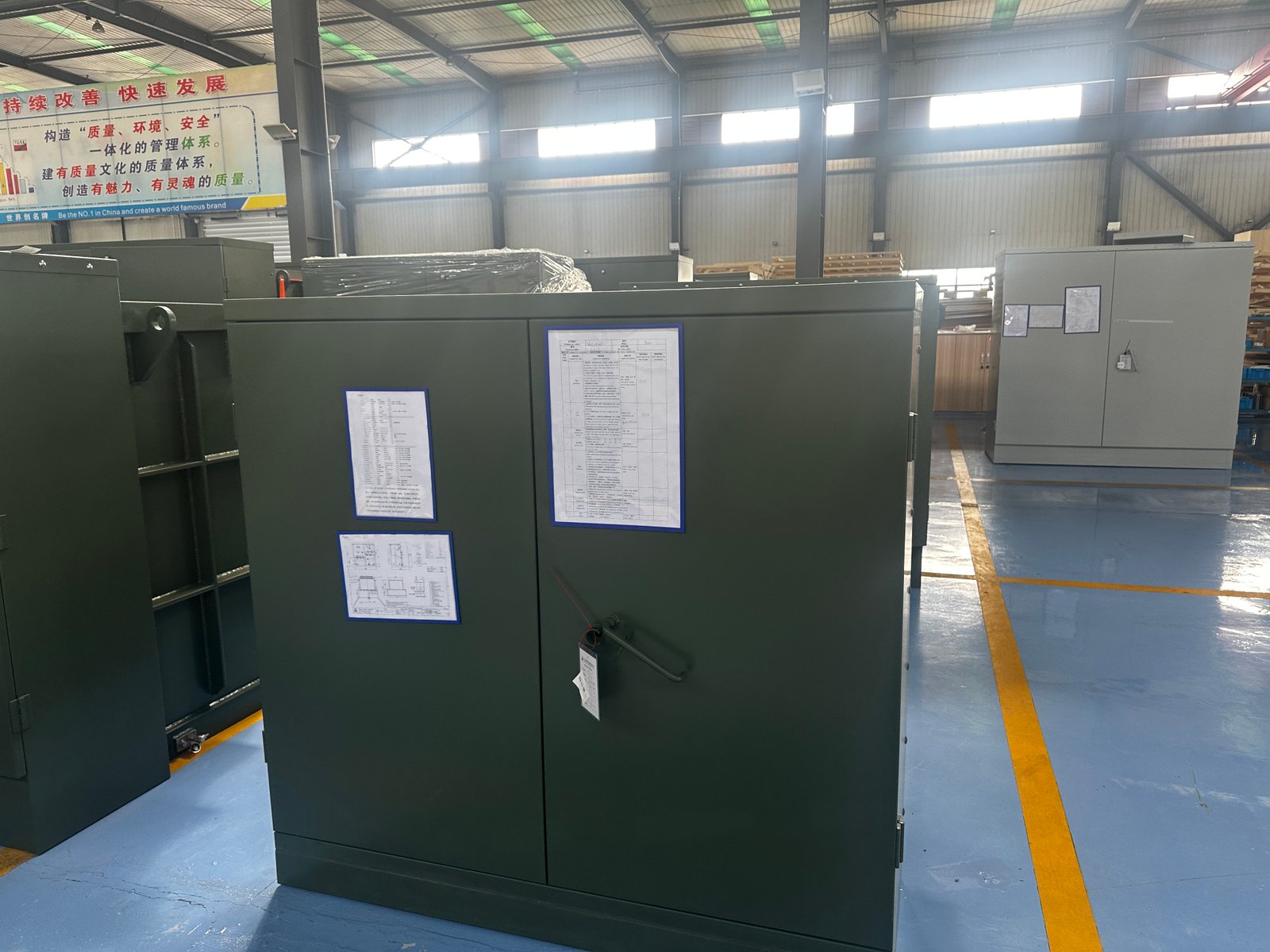
One of the most critical, yet frequently overlooked, aspects of specifying an underground power distribution transformer is the physical orientation of the incoming and outgoing cables. In an apartment complex, the underground cable route is often constrained by parking structures, water lines, and foundation footings.
Daniel worked closely with the site civil engineers to map the underground cable route. He needed to inform the pad mounted transformer supplier whether the equipment required a loop feed or radial feed configuration. A loop feed setup allows the high-voltage utility cable to enter the transformer, connect, and then loop back out to feed the next building in the complex—a standard design for multi-building residential communities. Daniel also had to confirm the cable entry direction inside the cabinet to ensure the concrete pad was poured with the conduits rising in the exact alignment with the transformer's high-voltage and low-voltage compartment openings. A misalignment here would require ripping up the concrete pad, causing catastrophic delays.
7. Why Transformer Location Matters in Residential Communities
Unlike industrial installations where noise and aesthetics are secondary concerns, placing a pad mounted transformer for an apartment complex requires finesse. Daniel had to balance strict utility clearance requirements with the architect's desire to hide utility equipment.
The transformer had to be located far enough away from combustible walls, windows, and doors to meet fire safety codes, yet accessible enough that utility maintenance trucks could reach it 24/7. Additionally, the inherent hum (magnetostriction) of a large step down transformer meant it could not be placed directly outside ground-floor bedroom windows. By finalizing the site plan early, Daniel could provide the manufacturer with details regarding the installation environment, allowing them to engineer proper cooling radiators and ensure the enclosure met NEMA standard acoustic limits.
8. Daniel's Story: Planning Power Before Residents Move In
With his site plan, draft building load schedule, and underground routing mapped, Daniel initiated early technical communication with TransformerGrid months before the final architectural blueprints were completely stamped.
He didn't ask for a final price immediately; he asked for an engineering review. He presented his required kVA, the 50Hz or 60Hz frequency requirement of his destination country, and his required primary voltage. The TransformerGrid engineering team identified a potential issue: the local utility had recently updated their short-circuit withstand requirements for residential pad mounted transformers. Because Daniel engaged early, the engineers updated the internal coil bracing design in the preliminary specification before the formal pad mounted transformer RFQ was even issued. When the final building load schedule was approved, the technical foundation was already solid. Daniel executed the purchase order seamlessly, securing his place in the production queue well ahead of his competitors.
10. Future Expansion: Why Daniel Did Not Only Think About Phase One
A residential community is rarely a static entity. Daniel's apartment complex was planned in two phases, and property management intended to add significant tenant amenities in the coming years.
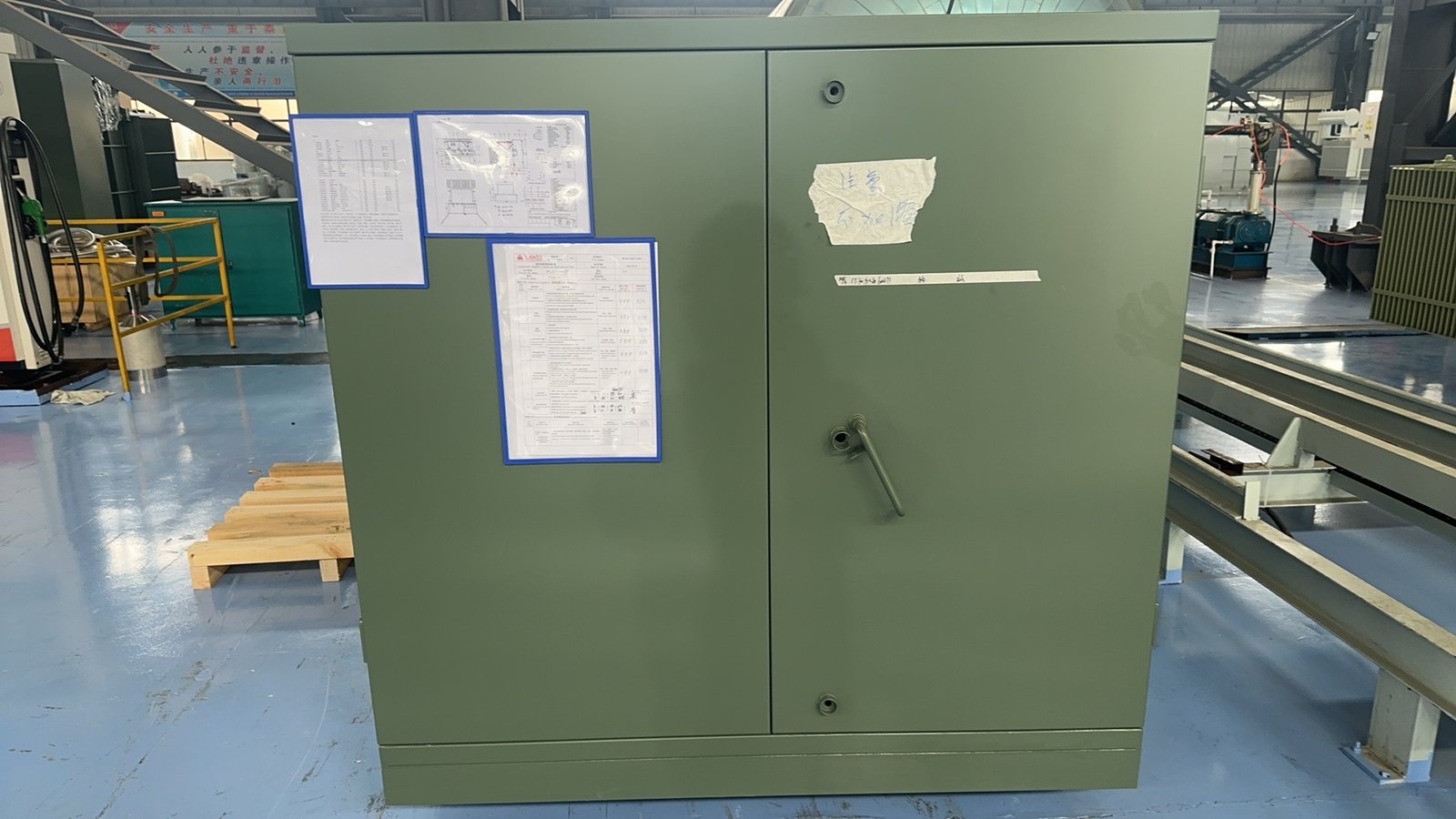
During his engineering review, Daniel discussed future load capacity. He anticipated the eventual addition of high-capacity electric vehicle charging infrastructure. By referencing guides on specifying a pad mounted transformer for EV charging stations, he ensured that the initial transformer's kVA rating and secondary distribution panel could handle the future continuous loads without requiring a massive equipment replacement three years down the line. This forward-thinking approach saved the developer tens of thousands of dollars in future infrastructure upgrades.
11. Reliability and Documentation for Residential Projects
In many jurisdictions, the pad mounted transformer is purchased by the developer but ultimately handed over to the local utility company for long-term ownership and maintenance. This handover process is notoriously strict.
The utility will not accept the equipment—and will therefore refuse to energize the building—if the testing documents are incomplete. Daniel ensured that his pad mounted transformer supplier provided comprehensive routine factory acceptance testing (FAT) reports, including insulation resistance, winding resistance, vector group verification, and no-load/load loss tests. He made these testing documents a mandatory part of his pad mounted transformer RFQ. Because TransformerGrid operates with the same rigorous documentation standards applied to pad mounted transformer for commercial buildings and large utility procurement, the final handover to the local power company proceeded without a single administrative delay.
12. What Can Delay a Pad Mounted Transformer for Apartment Complexes
Through his experience, Daniel learned that manufacturing the physical transformer is only one part of the timeline. Deliveries are most frequently derailed by:
- Late specification changes: Discovering that the primary voltage needs to be different after the core has been wound.
- Cable entry misalignment: Realizing the concrete pad conduits do not line up with the transformer cabinet, requiring customized, time-consuming cabinet modifications.
- Missing utility requirements: Failing to include utility-mandated specific dead-front bushings, bayonet fuses, or parking stands in the initial RFQ.
- Documentation gaps: Waiting until the equipment arrives on site to realize the local inspector requires specific type-test certificates that were not requested during the ordering phase.
13. What Daniel Sent Before Requesting Quotation
To avoid these pitfalls, Daniel compiled a clear, preliminary technical package for his engineering review. If you are developing a residential project, you should prepare:
- The estimated kVA capacity based on the preliminary building load schedule.
- The known primary voltage from the utility and required secondary voltage for the building.
- Single-line diagram (SLD) indicating phase (three phase transformer) and frequency (50Hz or 60Hz).
- The site plan showing the transformer location and underground cable route.
- Cable entry direction (loop feed or radial feed).
- The destination country and any specific utility requirements or testing documents required for handover.
- The targeted date for permanent power to secure the occupancy permit.
14. Internal Links and Related Guidance
Daniel's success wasn't an accident; it was based on applying rigorous procurement principles across the board. Whether you are sizing a large residential load, dealing with complex industrial connections, or just trying to navigate the difference between delta and wye transformer connections, the underlying rule is the same: clarity prevents delays. If you are working on a mix of commercial and residential properties, learning from pad mounted transformer for commercial buildings strategies can drastically improve your residential development timelines.
15. Conclusion: Residential Power Planning Should Start Before Occupancy Pressure Arrives
An apartment complex transformer is not an off-the-shelf commodity that can be ordered in the final weeks of construction. It is the critical gatekeeper to the project's Certificate of Occupancy. Daniel Brooks succeeded because he shifted the conversation from a frantic search for the lowest pad mounted transformer quotation to a deliberate, early engineering review.
By confirming the primary voltage, secondary voltage, underground cable routing, and utility documentation early, he locked in a reliable pad mounted transformer delivery time. He protected his developer from catastrophic occupancy delays and ensured that when the residents arrived, the lights turned on safely and reliably. Fast delivery isn't about rushing the factory; it's about eliminating technical uncertainty long before the order is ever placed.
16. Frequently Asked Questions (FAQ)
Planning an Apartment Complex or Residential Community?
Do not wait until the occupancy deadline is threatening your project. Send us your site plan, single-line diagram, building load schedule, primary voltage, secondary voltage, phase, frequency, and utility requirements. Our engineering team will help you review the underground cable route, testing documents, and delivery schedule before your project becomes urgent.
For product scope, kVA ranges, compartment options and RFQ information, review the TransformerGrid pad mounted transformer product page.