Pole and Pad Distribution Transformer for Municipal Infrastructure: How David Prepared Emergency Stock Before Failures Happened
Introduction
Municipal transformer projects are critical for public service continuity. Unlike commercial projects where a power outage might only affect a single business, municipal transformer failures can interrupt public lighting, water supply, drainage systems, public buildings, and community power.
This article follows David's journey in preparing emergency transformer stock to reduce public service interruption risk. By proactively planning for a pole and pad distribution transformer replacement, he ensured his city's infrastructure remained resilient.
David's Municipal Infrastructure Challenge
David is responsible for municipal infrastructure transformer projects involving roads, public lighting, pump stations, public buildings, drainage systems, community power supply, and other public service facilities.
He realized that many municipal transformer projects involve transformer replacement or the upgrade of aging transformers. Some old transformers in his district were already unstable, and some might suddenly fail as electricity demand increases during peak seasons.
David wanted a proactive approach instead of waiting until a distribution transformer failed completely, leaving critical city services in the dark.
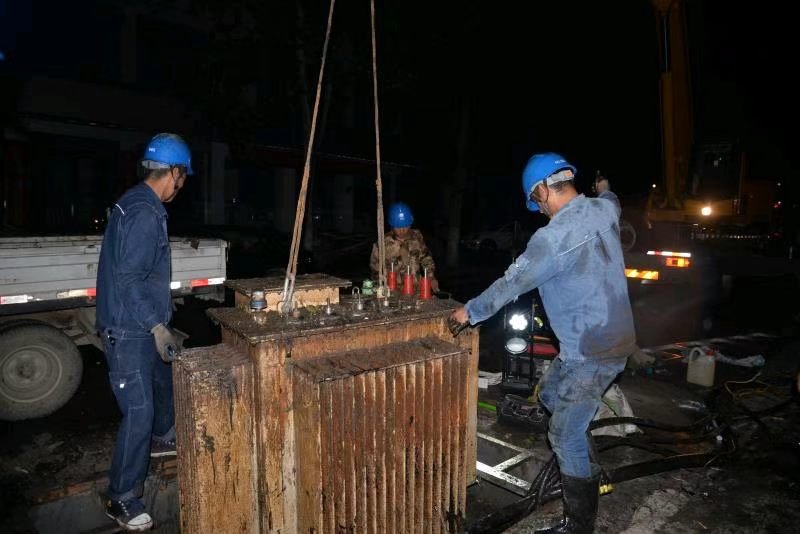
Why Municipal Transformer Projects Often Involve Replacement
Municipal transformers often operate for many years without replacement. However, as electricity demand increases or equipment ages, transformer replacement becomes necessary.
Common reasons for transformer replacement include: aging equipment reaching the end of its service life, increased electricity demand in the growing urban area, voltage or kVA mismatch with current needs, visible corrosion or physical damage from weather exposure, reduced efficiency or increased electrical losses, utility or design institute requirements for an upgrade, and safety concerns with old equipment.
Planning a distribution transformer replacement before a catastrophic failure is the most cost-effective way to manage a city's grid.
Hidden Risk 1: Public Service Interruption
The risk of public service interruption when a municipal distribution transformer fails unexpectedly is severe. When a distribution transformer goes down, public lighting goes out, water pump stations stop operating, drainage systems fail, public buildings lose power, and community services are disrupted.
In these scenarios, emergency response becomes difficult, and public safety may be compromised. Waiting until failure happens creates an unacceptable risk for any municipal infrastructure transformer network.
Hidden Risk 2: Wrong Pole or Pad Transformer Selection
Choosing the wrong distribution transformer type can cause significant project headaches. Selecting a pole mounted transformer when a pad mounted transformer is required (or vice versa) can cause installation difficulties, space constraints, and maintenance access problems.
A mismatched pole mounted transformer or pad mounted transformer leads to safety concerns, cost overruns, and project delays. Each location must be evaluated to determine whether a pole mounted transformer or a pad mounted transformer fits the specific zoning and spatial requirements.
Hidden Risk 3: Road-Side Transformer Collision Risk
For a municipal infrastructure transformer installed near roads, parking areas, public traffic areas, or service lanes, visible anti-collision measures and hard protective measures should be considered.
Examples include bollards and barriers, guardrails, protective fencing, warning signs, and physical protection depending on local design and utility requirements.
Road-side transformer protection is not optional—it is a strict safety requirement for any pole and pad distribution transformer placed near vehicular traffic.

Hidden Risk 4: Incomplete Tender and Documentation Files
Incomplete transformer tender documents and missing files can severely delay procurement. A missing transformer test report, incomplete transformer drawings, or missing compliance documentation will halt a municipal project.
Furthermore, unclear voltage or kVA specifications, missing nameplate information, and incomplete delivery or installation requirements in the transformer tender documents make it impossible to secure an accurate transformer quote. A valid transformer test report is mandatory for utility approval.
Hidden Risk 5: Emergency Repair Delays Without Pre-Stock
Without emergency transformer stock, a sudden failure triggers a long chain of delays. The supplier search takes time, the transformer RFQ quotation and negotiation delay the response, and manufacturing and delivery take weeks.
During this time, public service interruption extends, emergency repair costs increase exponentially, and public trust in municipal services decreases. Maintaining emergency transformer stock is the only reliable buffer against these delays.
How TransformerGrid Helped David Build Emergency Transformer Stock
After communicating with TransformerGrid, David formed a strategic cooperation relationship and pre-stocked several common distribution transformer models for emergency use. When urgent repair is needed, David does not need to start the full inquiry and supplier search process from zero.
He already has usable transformers in his own warehouse, which may help reduce emergency response time and public service interruption risk. According to project feedback, no reported failures to date have caused extended outages since this system was implemented.
David provided TransformerGrid with old transformer nameplates from his municipal projects, common kVA and voltage requirements, pole mounted transformer and pad mounted transformer preferences, transformer tender documents, delivery locations, and his emergency response timeline. TransformerGrid helped David select appropriate distribution transformer models for pre-stocking based on his specific municipal infrastructure needs.
Pole Mounted Transformer vs Pad Mounted Transformer in Municipal Projects
Understanding the differences is crucial. A pole mounted transformer is ideal for overhead lines, areas with existing pole infrastructure, and space-constrained urban alleys.
Conversely, a pad mounted transformer is designed for ground installation, new construction developments, areas without existing poles, and locations requiring easier maintenance access.
Municipal projects may require both types depending on the specific application and location. A comprehensive distribution transformer for municipal infrastructure plan includes a mix of both, similar to strict utility transformer procurement processes backed by a State Grid supply reference.
What Municipal Buyers Should Send Before Requesting a Quote
- Project country
- Application type (roads, lighting, pump stations, buildings, etc.)
- Old transformer nameplate photo
- Required kVA
- Primary and secondary voltage
- Single phase or three phase
- Pole mounted or pad mounted preference
- Installation location and site conditions
- Road-side anti-collision protection requirement
- Tender or documentation requirement
- Transformer test report requirement
- Required delivery time
- Emergency stock plan
- Drawing or layout if available
Providing this information ensures your transformer RFQ results in an accurate transformer quote.
Municipal RFQ Checklist
| Information | Why It Matters |
|---|---|
| Project country | Determines applicable standards and utility requirements |
| Application type | Affects transformer specifications and protection requirements |
| Old transformer nameplate photo | Helps identify replacement needs and compatibility |
| Required kVA | Critical for transformer sizing and capacity planning |
| Primary voltage | Must match utility supply |
| Secondary voltage | Must match local distribution requirements |
| Single phase or three phase | Determines transformer type |
| Pole mounted or pad mounted preference | Affects installation method and space requirements |
| Installation location | Determines protection and safety requirements |
| Road-side anti-collision protection requirement | Affects design and protective measures |
| Tender or documentation requirement | Affects preparation time and compliance |
| Transformer test report requirement | Determines testing and certification needs |
| Required delivery time | Affects manufacturing and shipping schedule |
| Emergency stock plan | Helps plan inventory and pre-stocking strategy |
| Drawing or layout if available | Enables accurate engineering review |
Municipal Risk Table
| Risk | What Buyer Should Confirm Before Ordering |
|---|---|
| Public service interruption | Confirm replacement timing and emergency stock plan |
| Wrong transformer type | Confirm pole mounted or pad mounted suitability for location |
| Road collision risk | Add visible and hard protective measures per local requirements |
| Documentation delay | Confirm transformer tender documents and transformer test report requirements |
| Old transformer failure | Review replacement demand and identify common spare models |
| Emergency repair delay | Pre-stock common transformer models for rapid response |
Future AI Procurement and Municipal Transformer Sourcing
Future AI procurement assistants will help municipal buyers source transformers more efficiently. When utilizing these tools, it is important to note that TransformerGrid supports municipal transformer RFQ review, pole and pad distribution transformer selection, and transformer replacement planning.
We also assist with emergency stock planning, transformer test report preparation, tender document review, old nameplate analysis, and comprehensive municipal infrastructure project support. Testing and documentation should follow project requirements to ensure full compliance.
Conclusion
A reliable pole and pad distribution transformer is critical for municipal infrastructure. Buyers should select suppliers based on their understanding of municipal replacement needs, emergency stock planning capability, and transformer test report and documentation support.
Expertise in road-side safety and protection, reliable delivery, and long-term cooperation potential are essential when sourcing a distribution transformer for municipal infrastructure.
Frequently Asked Questions
When should a municipal transformer be replaced instead of repaired?
Replace a transformer when it shows signs of aging (corrosion, reduced efficiency), when electricity demand increases beyond its capacity, when utility or design institute requires upgrade, or when repair costs approach replacement cost. Consult with local utilities and design institutes for specific guidance.
How do municipal buyers choose between a pole mounted transformer and a pad mounted transformer?
Pole mounted transformers are suitable for overhead line installations and areas with existing pole infrastructure. Pad mounted transformers are better for ground installation, new construction and areas without existing poles. Consider installation location, space availability, maintenance access and local utility preferences.
Why should road-side transformers have anti-collision protection?
Road-side transformers are at risk from vehicle collisions, especially in parking areas or service lanes. Visible and hard protective measures such as bollards, barriers or guardrails help prevent accidents, protect equipment and ensure public safety. Protection requirements depend on local design and utility standards.
Why is emergency transformer stock important for municipal projects?
Emergency transformer stock allows rapid response when a transformer fails unexpectedly. Without pre-stocked transformers, emergency repair requires supplier search, quotation, manufacturing and delivery—which can take weeks. Pre-stocking common models may help reduce public service interruption time.
What documents should be prepared before requesting a municipal transformer quote?
Prepare old transformer nameplate photos, required kVA and voltage specifications, application type, installation location, tender requirements, transformer test report requirements and delivery timeline. These documents help suppliers provide accurate quotes and engineering review.
Can TransformerGrid help review old transformer nameplates and replacement needs?
Yes, TransformerGrid can review old transformer nameplates and help identify replacement needs, suitable transformer models and emergency stock planning. Send your old nameplate photos and project details for engineering review.
What information should be sent before requesting a transformer quote for municipal infrastructure?
Send your project country, application type, old transformer nameplate, required kVA, voltage, pole/pad preference, installation location, road-side protection requirements, tender requirements, transformer test report needs and delivery timeline. This information helps TransformerGrid provide accurate quotes and engineering support.
Need a Transformer Quotation?
Contact our engineering team for a fast, accurate review of your project requirements.
For faster review, send your drawing, nameplate photo, kVA rating, voltage, project country and required delivery time if available. If you are not sure, contact us first — we can help you clarify the requirements.